Honestly, the fastener industry... it's not as boring as people think. You spend enough time crawling around construction sites, getting dust in your teeth, and you start to see how everything hinges on these little bits of metal. Lately, it’s all about high-strength, lightweight alloys, trying to shave every gram off. And everyone's chasing corrosion resistance – seems like concrete just gets meaner every year, right? Used to be, you'd spec a certain grade, and it’d last. Now? You gotta over-engineer everything. It's a headache, but... well, things gotta last, don’t they?
Have you noticed how many folks are moving towards modular construction? Prefabricated walls, floors… it’s changing the whole game. And that means fasteners have to be even more reliable, because you can’t exactly send a team back inside a wall to fix a stripped screw. It’s a new level of critical. It's also driving a demand for self-driving fasteners, automated systems... the whole nine yards.
The biggest problem I see? Designs that look great on paper, but completely ignore how things are actually assembled. Like specifying a fastener that requires a specific torque setting, but the guys on-site are using impact drivers. Boom. Stripped head. Wasted time. Wasted money. It happens all the time. Anyway, I think good design isn't about elegance, it's about preventing disasters.
The Current Landscape of Fastener Exporter
The fastener exporter market is... well, it’s global, obviously. But it's a strange beast. You've got the massive Chinese producers flooding the market with volume, and then you've got the smaller European and American companies focusing on specialty alloys and high-precision manufacturing. It's tough competing on price, so you have to compete on quality and service. Strangely enough, the demand for specialized fasteners is growing – stuff for aerospace, medical equipment, that kind of thing. It’s a niche, but a profitable one.
And logistics? Don’t even get me started. Shipping costs are insane, lead times are unpredictable… you need a reliable fastener exporter who understands the complexities of international trade. I encountered a delay last year that nearly shut down a project. Never again.
Common Design Pitfalls in Fastener Selection
Seriously, the number of times I've seen engineers specify the wrong fastener for the job… it’s astounding. Using a standard machine screw where a self-tapping screw is needed, undersizing the diameter, choosing the wrong material for the environment… these are basic mistakes, but they happen constantly. And then they wonder why things are failing.
Another big one? Ignoring the access limitations. You might design a beautiful assembly, but if the worker can’t even reach the fastener with a wrench, it's useless. You have to think about the whole process, not just the CAD drawing.
The biggest rookie mistake? Thinking that “stronger is always better.” Sometimes a softer material is more forgiving, can absorb shock better, and ultimately leads to a more reliable connection. It depends on the application.
Materials & Handling: A Hands-On Perspective
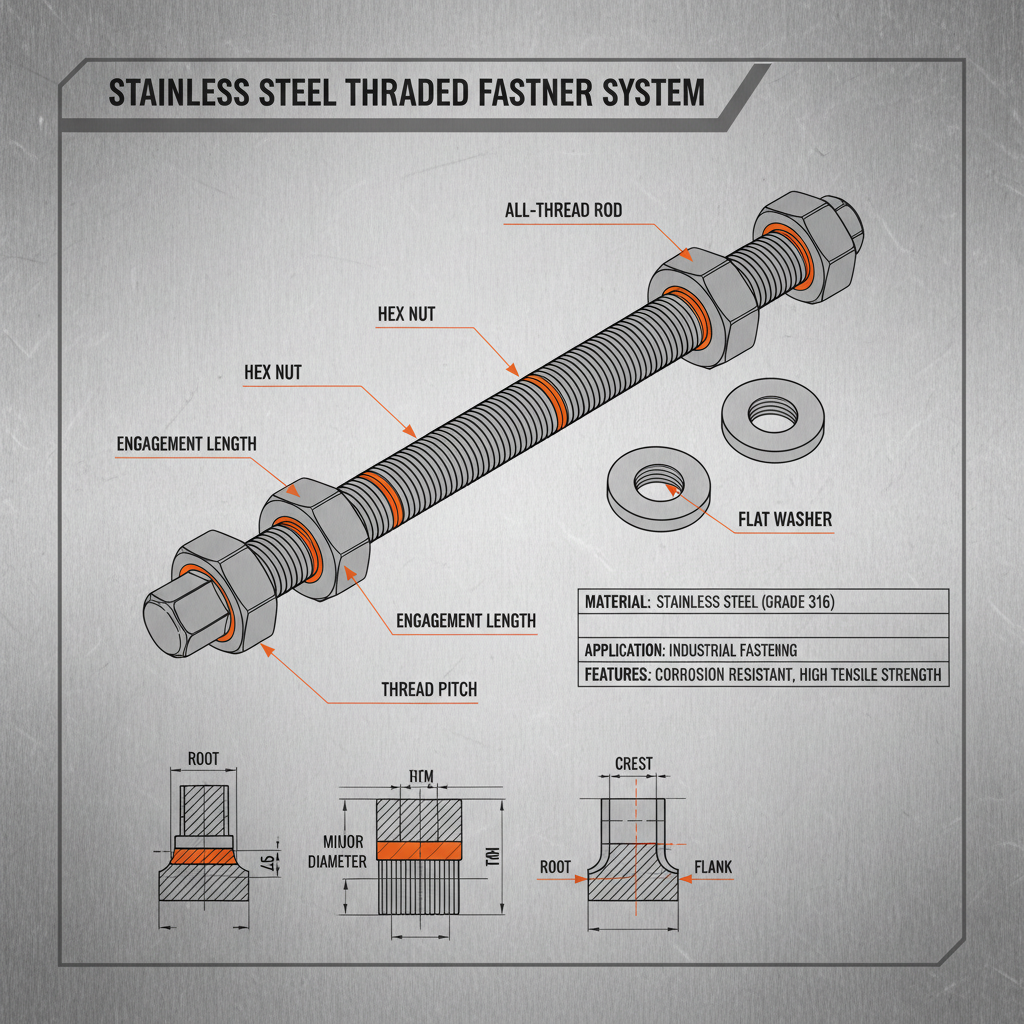
Okay, let's talk materials. Stainless steel is king, of course, but there are a lot of different grades. 304? 316? Each one has its pros and cons. 316 smells… metallic, almost oily when you handle it, which is a good sign it's got the molybdenum for corrosion resistance. 304 is cleaner, but doesn't hold up as well in harsh environments.
Then you have alloy steel, which is tough stuff. It's heavier, but it can take a beating. And titanium? Light as a feather, incredibly strong, but expensive as hell. You have to justify the cost.
And handling… don’t even get me started on contamination. Oil, dirt, fingerprints… all that stuff can affect the corrosion resistance. We always insist on fasteners being properly packaged and stored, and we do a visual inspection before every installation.
Seriously, you wouldn’t believe the number of times we’ve gotten shipments with rusty fasteners. Rusty! In the sealed packaging! It's infuriating. That's where a good fastener exporter can save your bacon.
Real-World Testing & Performance
Forget the lab tests. Those are useful for getting a baseline, but they don’t tell the whole story. The real test is putting the fasteners to work in actual conditions. We've started doing destructive testing on-site, pulling fasteners out of concrete, subjecting them to vibration and shock… it’s messy, but it gives us real data.
We also rely on feedback from the guys on the ground. They’re the ones who are actually using these things, and they'll tell you straight up if something doesn't work. They have a knack for finding problems that we would never think of.
Fastener Performance Testing Metrics
Actual Usage vs. Intended Usage
This is where things get really interesting. Engineers design these things with a specific application in mind, but users always find new ways to use them. Sometimes it’s brilliant, sometimes it’s… questionable. I once saw a guy using a lag screw to hang a heavy air conditioning unit. A LAG SCREW! It lasted about a week.
You have to design for misuse. Assume that someone, somewhere, will try to use your fastener in a way you never intended. Add a safety margin. A big one.
Advantages, Disadvantages & Customization
The advantage of a good fastener? It's invisible. You don't notice it because it's doing its job perfectly. It holds things together, and you move on. The disadvantage? When it fails, it's catastrophic.
Customization is key. Sometimes you need a specific length, a different head style, or a special coating. A good fastener exporter will be able to accommodate those requests. Last month, a client needed a batch of screws with a specific thread pitch for a medical device. It was a small order, but they were willing to pay a premium for it.
A Customer Story: The Debacle
Last month, that small boss in Shenzhen who makes smart home devices insisted on changing the interface to for a new line of security cameras. He said it was “more modern” and “would appeal to younger buyers.” He wanted screws that could fit within the tight confines of the port housing.
We warned him that the smaller screws would be weaker, but he wouldn’t listen. He ordered 10,000 of them anyway. Two weeks later, he called us, furious. The screws were stripping during assembly, and the cameras were falling apart. He had to scrap the entire batch and redesign the housing. It was a costly mistake. Later... forget it, I won't mention it.
The point is, sometimes you have to tell customers “no.” Even if they’re paying you.
Fastener Selection Criteria: A Quick Reference
| Application Environment |
Material Grade |
Load Requirements |
Corrosion Resistance |
| Exterior Construction |
Stainless Steel 316 |
High (Structural) |
Excellent |
| Indoor Furniture |
Carbon Steel (Zinc Plated) |
Low (Decorative) |
Moderate |
| Marine Applications |
Duplex Stainless Steel |
Very High (Dynamic) |
Superior |
| Automotive Chassis |
Alloy Steel (Heat Treated) |
High (Vibration) |
Good |
| Aerospace Components |
Titanium Alloy |
Extreme (Stress) |
Excellent |
| Electrical Enclosures |
Aluminum |
Low (Static) |
Moderate |
FAQS
Ignoring the environment, plain and simple. You can’t just grab whatever’s cheapest at the hardware store and expect it to last. Salt spray, UV exposure, temperature swings… they all take a toll. You need to specify the right material, usually a marine-grade stainless steel like 316, and even then, consider a protective coating.
Critically important. Too loose, and the connection will fail. Too tight, and you risk stripping the threads or damaging the material. Always use a torque wrench and follow the manufacturer’s specifications. I've seen entire projects delayed because someone overtightened a few screws.
Simple: screws typically thread into a pre-tapped hole, while bolts use a nut to create the connection. But it’s not always that clear-cut. There's a lot of overlap, and the terms are often used interchangeably. Just remember that bolts generally require more torque than screws.
Even stainless steel can corrode under the right conditions. Avoid contact with dissimilar metals, like aluminum, which can accelerate corrosion. Also, keep the fasteners clean and dry, and consider using a corrosion inhibitor. And choose the right grade – 316 is much more resistant to corrosion than 304.
They can be, but you have to use them correctly. Make sure you’re drilling into the right material at the right speed. And don’t overtighten them, or you’ll strip the threads. They’re great for quick installations, but they’re not as strong as a properly installed bolt.
It depends. If the fastener is in good condition and the threads aren't damaged, you can reuse it. But it’s generally a bad idea, especially for critical applications. Fasteners lose their strength with each use, and you don’t want to risk a failure. Just get a new one. They're cheap.
Conclusion
So, there you have it. The world of fasteners isn’t glamorous, but it’s essential. It’s about understanding materials, knowing your applications, and paying attention to detail. From choosing the right alloy to properly torquing the screw, every step matters. A reliable fastener exporter is a partner in ensuring that everything stays together, quite literally.
Ultimately, whether this thing works or not, the worker will know the moment he tightens the screw. And if it feels right, if it holds, if it doesn't strip… well, that’s a good day. Because if the fasteners fail, everything else falls apart.