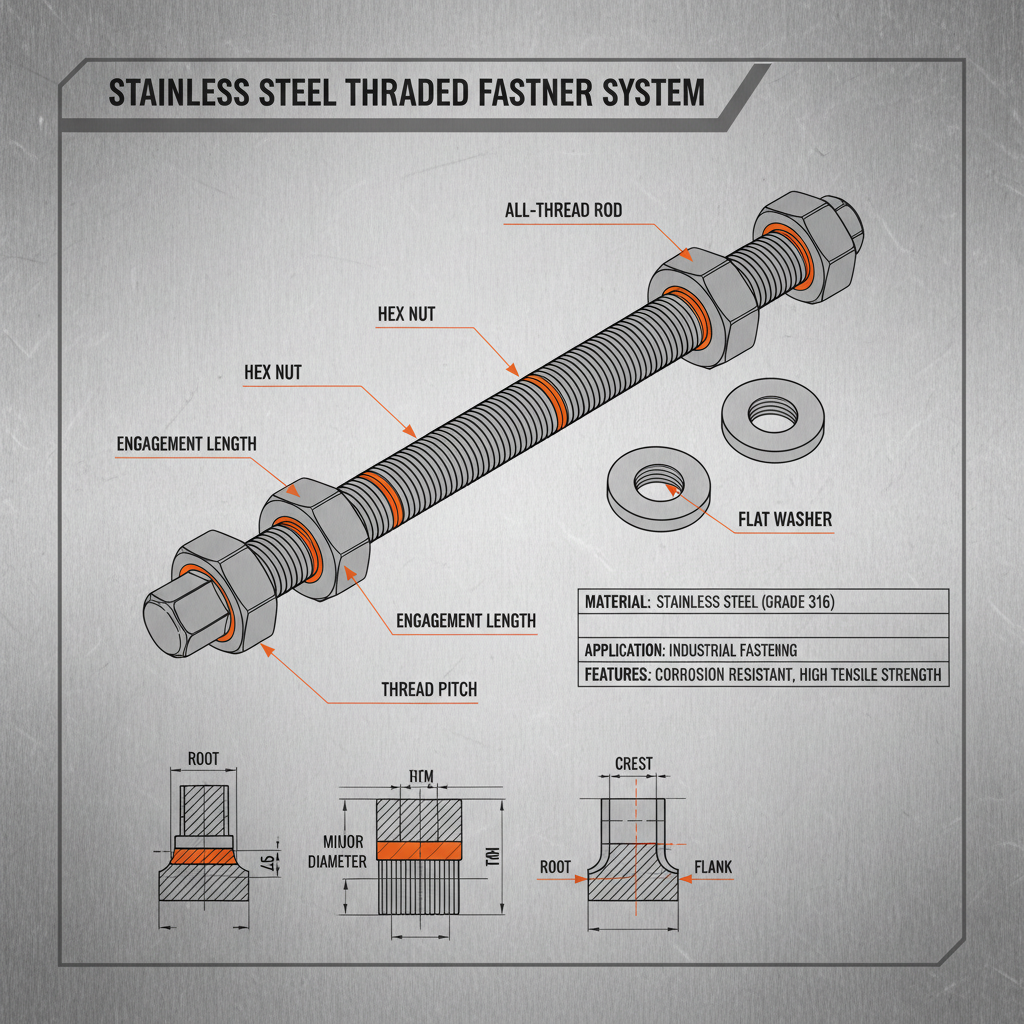
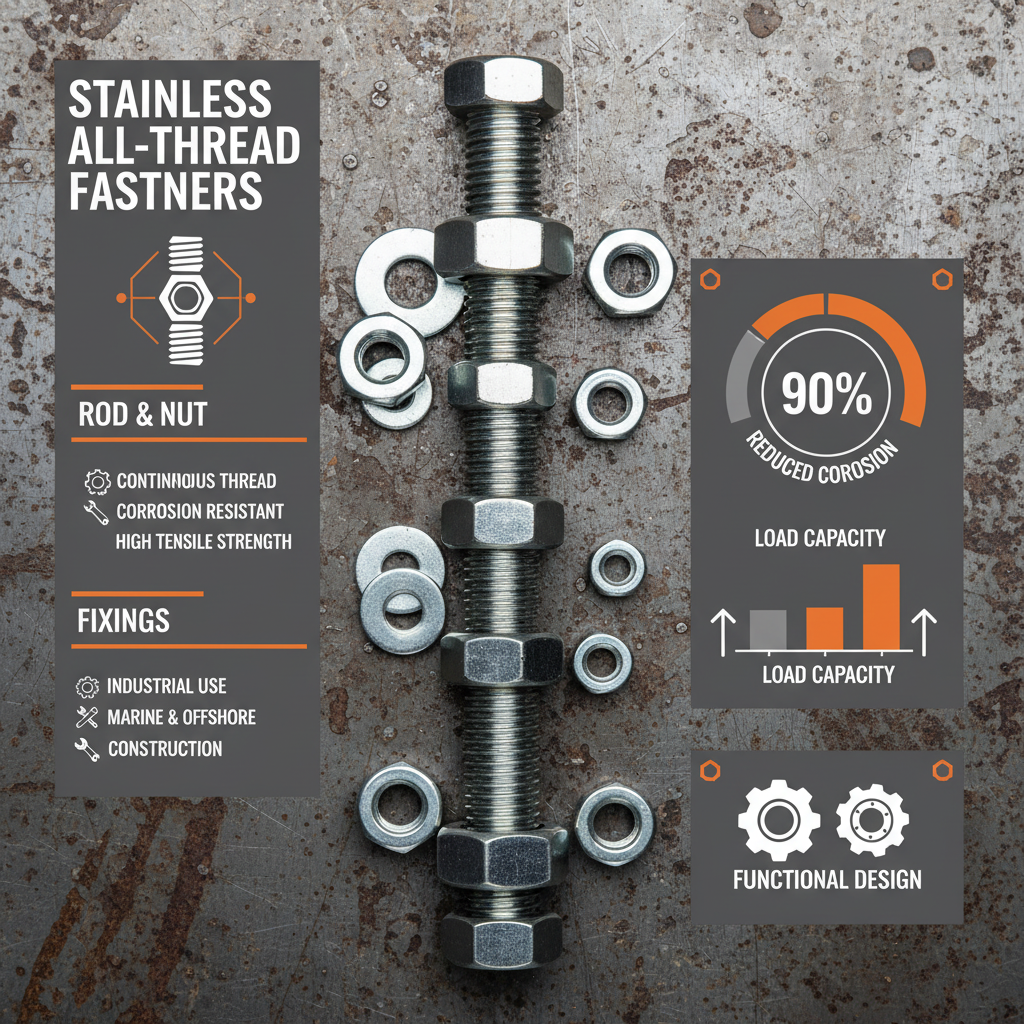
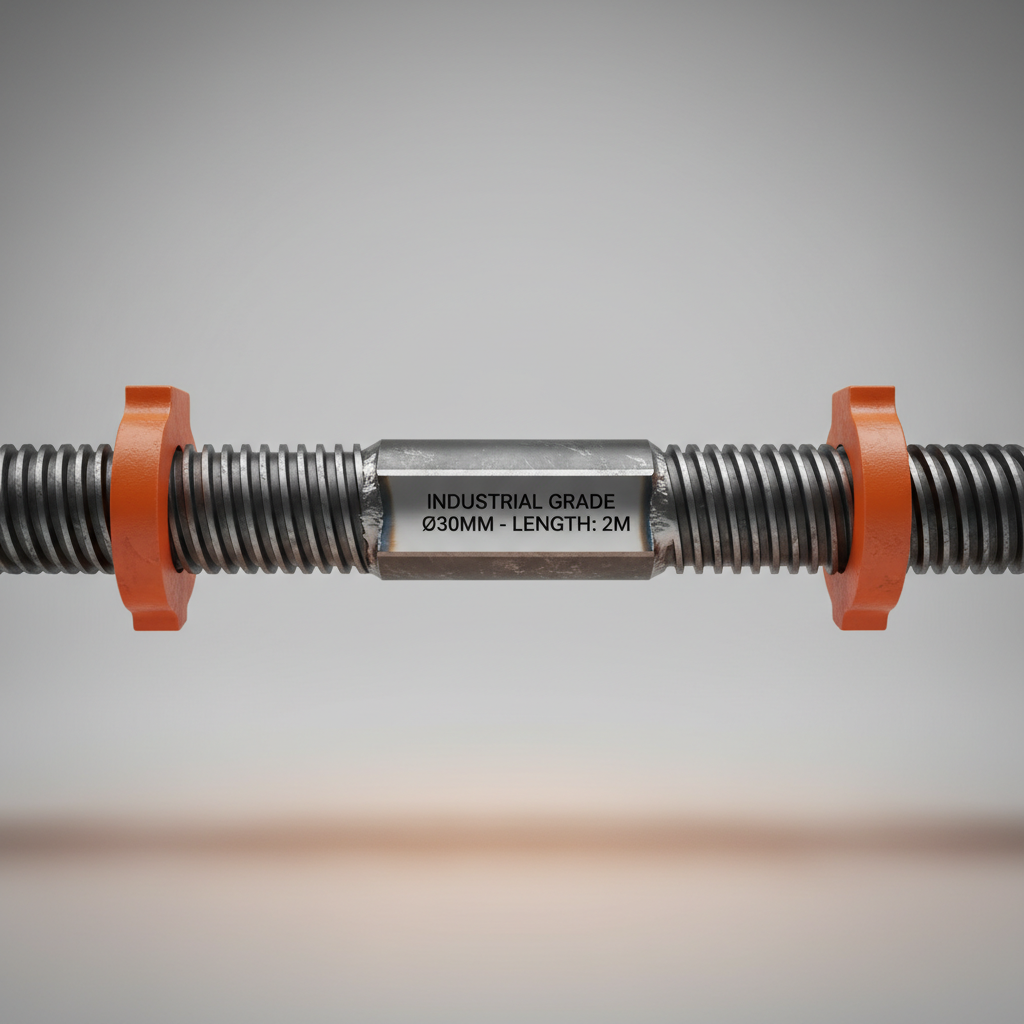
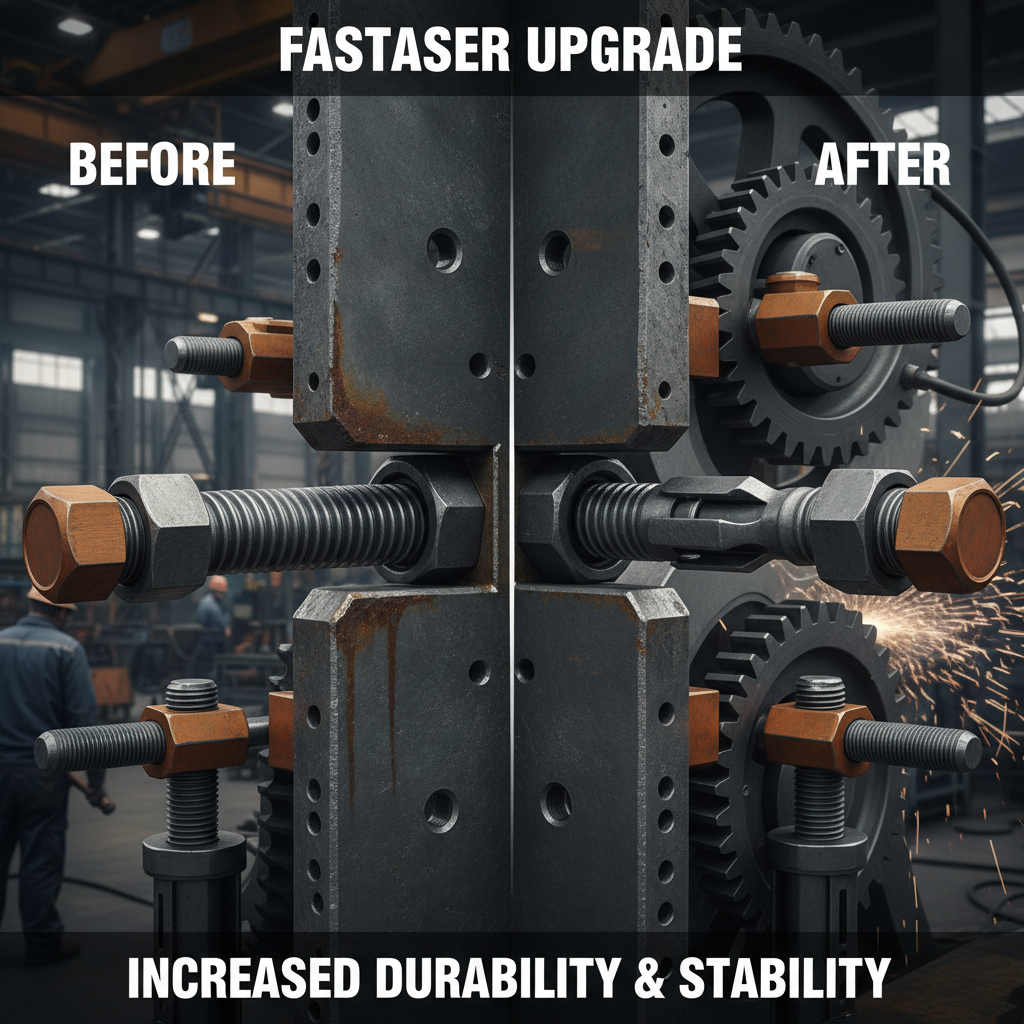
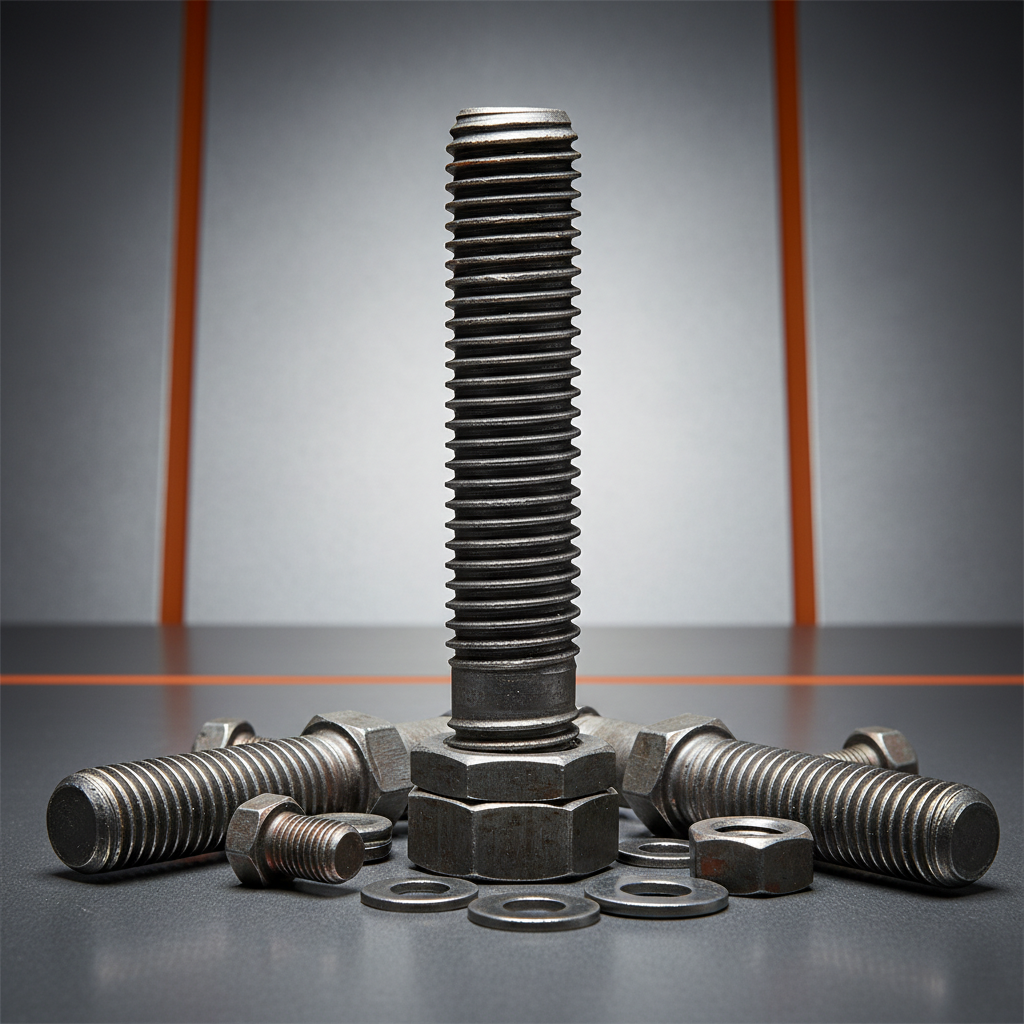
Stainless all thread is a critical component in a vast array of industries, from construction and manufacturing to infrastructure and even medical applications. Its inherent corrosion resistance, coupled with its high tensile strength, makes it an indispensable material for securing and connecting components in environments where durability and reliability are paramount. Understanding the nuances of stainless all thread—its various grades, manufacturing processes, and application-specific considerations—is crucial for engineers, procurement professionals, and anyone involved in designing and maintaining robust systems.
The global demand for stainless all thread is steadily increasing, driven by factors such as expanding infrastructure projects in emerging economies, a growing emphasis on safety and longevity in critical applications, and the increasing adoption of stainless steel across diverse sectors. This demand necessitates a thorough understanding of the material’s properties, supply chains, and emerging innovations. According to industry reports, the stainless steel market is projected to reach significant growth levels in the coming decade, with all thread representing a substantial portion of that expansion.
Choosing the right stainless all thread can significantly impact the lifespan and performance of a project. Incorrect material selection can lead to premature failure, costly repairs, and even safety hazards. This guide aims to provide a comprehensive overview of stainless all thread, covering its definition, key characteristics, applications, and future trends, enabling informed decision-making for a wide range of stakeholders.
Introduction to Stainless All Thread
Stainless all thread, characterized by its continuous helical ridge, provides a robust fastening solution suitable for a wide spectrum of applications. Its strength and corrosion resistance are vital in environments where conventional threaded rods would quickly degrade. Selecting the correct grade of stainless all thread depends greatly on the specifics of the application, particularly regarding exposure to chemicals, temperature variations, and mechanical stress.
The increasing focus on sustainable materials and long-term cost-effectiveness further elevates the importance of stainless all thread. Its durability reduces the need for frequent replacements, minimizing waste and lifecycle costs. As projects become more complex and demanding, the reliability offered by stainless all thread becomes an increasingly valuable asset.
Defining Stainless All Thread
Stainless all thread is essentially a rod with a continuous, uniform thread running along its entire length. Unlike standard bolts or screws that have threads on a portion of their shaft, all thread provides a fully threaded fastening solution. This allows for adjustable connections and the ability to create a through-bolt effect without the need for nuts at both ends in certain configurations. It’s produced by rolling, cutting, or grinding threads onto a stainless steel rod.
The stainless steel composition is critical, with various grades—like 304, 316, and 316L—offering differing levels of corrosion resistance and mechanical properties. The choice of grade depends on the specific environment and application requirements. The continuous thread form facilitates strong, reliable connections, making it vital in infrastructure projects and critical industrial equipment.
Stainless all thread directly addresses the need for long-lasting, reliable fasteners in demanding environments. In contrast to carbon steel alternatives, stainless all thread doesn’t require additional surface treatments like galvanization to prevent corrosion, making it a practical and cost-effective solution over the long term, particularly in marine or chemical processing industries.
Key Properties of Stainless All Thread
The defining characteristic of stainless all thread is its exceptional corrosion resistance. This is a direct result of the chromium content in the stainless steel alloy, which forms a passive layer on the surface, protecting it from rust and oxidation. Different grades offer varying levels of resistance; for instance, 316 stainless steel includes molybdenum for enhanced protection against chloride corrosion, making it ideal for marine environments.
Beyond corrosion resistance, stainless all thread boasts impressive tensile strength, meaning it can withstand significant pulling forces without breaking. This is crucial for applications where structural integrity is paramount. The strength is also influenced by the grade of stainless steel and the manufacturing process. Furthermore, stainless all thread possesses good ductility, allowing it to be bent or deformed without fracturing.
Another important property is its temperature resistance. Stainless all thread can maintain its strength and corrosion resistance over a wide temperature range, making it suitable for both high-temperature and cryogenic applications. Finally, stainless all thread is generally non-magnetic, which is essential for specific applications in industries like medical imaging and electronics.
Applications Across Industries
Stainless all thread finds widespread use in the construction industry, particularly in applications requiring strong, corrosion-resistant connections, such as anchoring systems, façade fixings, and structural supports. Its ability to withstand harsh weather conditions makes it ideal for outdoor structures and coastal projects. It's often used in bridge construction and high-rise buildings.
The chemical processing industry relies heavily on stainless all thread due to its resistance to corrosive chemicals and solvents. It's used in the construction of tanks, pipelines, and support structures for processing equipment. Similarly, in the marine industry, stainless all thread is essential for securing components on boats, ships, and offshore platforms, resisting saltwater corrosion effectively.
Stainless All Thread Application Ratings
Advantages and Long-Term Value
The primary advantage of stainless all thread lies in its exceptional durability and resistance to corrosion, which translates into reduced maintenance costs and a longer service life compared to carbon steel alternatives. This long-term value makes it a cost-effective choice despite its higher initial cost. Investing in stainless all thread minimizes the need for frequent replacements and associated labor expenses.
From a sustainability perspective, stainless all thread contributes to reduced waste due to its longevity. The use of a recyclable material like stainless steel further enhances its environmental profile. Furthermore, the reliability and safety offered by stainless all thread are paramount in critical applications, ensuring the structural integrity of projects and protecting human lives.
Future Trends in Stainless All Thread
Advancements in materials science are leading to the development of new stainless steel alloys with enhanced properties, such as increased strength, improved corrosion resistance, and better weldability. These innovations will further expand the range of applications for stainless all thread. Digital manufacturing techniques, like precision machining and additive manufacturing (3D printing), are also streamlining production processes.
The integration of smart sensors and monitoring systems into stainless all thread fasteners is an emerging trend. These sensors can provide real-time data on stress levels, corrosion rates, and temperature, enabling proactive maintenance and preventing catastrophic failures. Sustainability will continue to drive innovation, with increased focus on using recycled stainless steel and reducing the environmental impact of manufacturing processes.
Challenges and Solutions
One of the primary challenges associated with stainless all thread is its higher cost compared to carbon steel alternatives. However, this cost can be offset by considering the long-term benefits of reduced maintenance and increased durability. Careful material selection, choosing the appropriate grade for the specific application, is crucial to maximizing value.
Another challenge is the potential for galling—a form of adhesive wear—when tightening stainless all thread fasteners. Using anti-seize compounds or specialized coatings can mitigate this issue. Supply chain disruptions and fluctuating material prices can also pose challenges, necessitating robust sourcing strategies and inventory management.
Addressing these challenges requires a collaborative approach between manufacturers, engineers, and procurement professionals. Investing in research and development, optimizing manufacturing processes, and diversifying supply chains are essential steps to ensure the continued availability and affordability of high-quality stainless all thread.
FAQ: Common Questions About Stainless All Thread
Both 304 and 316 are common grades of stainless steel, but 316 contains molybdenum, which significantly enhances its corrosion resistance, particularly against chlorides and saltwater. This makes 316 ideal for marine applications and harsh chemical environments where 304 might corrode. 304 is generally suitable for less corrosive environments and offers a more economical option when chloride exposure is minimal.
Galling occurs due to friction and adhesion between stainless steel surfaces. To prevent it, use an anti-seize compound specifically designed for stainless steel. Applying a lubricant during installation reduces friction and prevents the surfaces from seizing. Using a different material for the nut, such as brass or nylon, can also help mitigate galling.
The tensile strength varies depending on the grade. 304 stainless all thread typically has a tensile strength of around 70,000 PSI, while 316 stainless all thread is slightly lower, around 65,000 PSI. Higher grades and specific heat treatments can increase tensile strength. Always consult the manufacturer’s specifications for accurate values.
Yes, stainless all thread can be welded, but it requires specific welding techniques and filler metals to maintain corrosion resistance. Proper preparation, including cleaning and preheating, is crucial. Using a filler metal compatible with the stainless steel grade ensures a strong and corrosion-resistant weld. Post-weld heat treatment may also be necessary.
Stainless all thread should be stored in a dry, clean environment to prevent corrosion. Avoid storing it in direct contact with carbon steel, as this can cause galvanic corrosion. If possible, store it in its original packaging or wrap it in protective materials. Regular inspection for signs of corrosion is also recommended.
Stainless all thread generally maintains its strength and corrosion resistance over a wide temperature range. However, extreme temperatures can affect its mechanical properties. High temperatures can reduce tensile strength, while cryogenic temperatures can make it brittle. Consult manufacturer specifications for temperature limitations specific to the grade of stainless steel.
Conclusion
In conclusion, stainless all thread remains a critical fastening solution across a diverse range of industries, prized for its exceptional corrosion resistance, strength, and durability. Its ability to withstand harsh environments and provide long-lasting performance makes it a cost-effective and sustainable choice for numerous applications. Understanding the nuances of different grades, proper installation techniques, and future trends is vital for maximizing its benefits.
Looking ahead, ongoing innovations in materials science and manufacturing processes will continue to enhance the capabilities of stainless all thread. By embracing these advancements and addressing current challenges, we can ensure the continued availability and affordability of this essential material. For reliable, high-quality stainless all thread solutions, visit our website: www.hbtbls.com.