In the demanding world of industrial construction and heavy-duty fastening, the hot dipped galvanized threaded rod stands as a critical component for ensuring structural integrity in corrosive environments. Unlike standard fasteners, these rods undergo a rigorous immersion process in molten zinc, creating a metallurgical bond that shields the steel from the relentless effects of oxidation and moisture.
Understanding the technical nuances of this fastening solution is essential for engineers and procurement managers who prioritize long-term safety over short-term costs. From coastal infrastructure to chemical processing plants, the ability of a threaded rod to withstand environmental stress determines the lifespan of the entire assembly, making the choice of coating a pivotal decision in project planning.
This guide explores the comprehensive utility of the hot dipped galvanized threaded rod, examining its manufacturing standards, comparative advantages, and the critical role it plays in modern global infrastructure. By aligning material science with practical application, we can ensure that buildings and machines remain secure for decades.
Global Industry Context of Hot Dipped Galvanized Threaded Rod
The global demand for high-durability fasteners is surging as urbanization expands into more extreme climates. According to international standards such as ISO and ASTM, the prevention of atmospheric corrosion is a primary concern for the longevity of steel structures. The hot dipped galvanized threaded rod has become the gold standard for outdoor and industrial applications where electro-galvanized alternatives fail due to thin coating layers.
Many emerging economies are currently upgrading their transport and energy grids, leading to a significant increase in the procurement of heavy-duty threaded rods. The challenge remains in balancing the initial procurement cost with the lifecycle value, as the failure of a single fastening point in a bridge or an oil rig can lead to catastrophic systemic collapses.
Definition and Technical Meaning of Galvanized Fastening
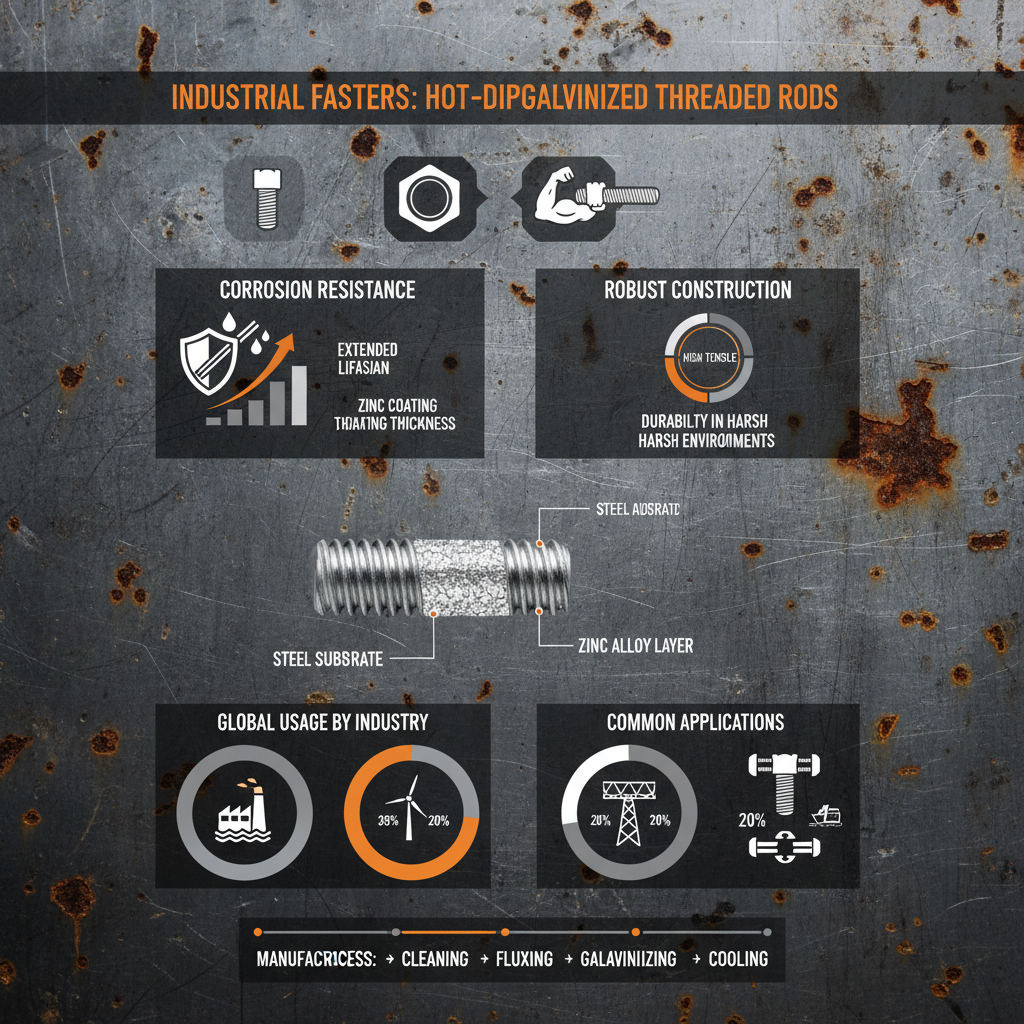
A hot dipped galvanized threaded rod is a continuous steel bar with external threads that has been submerged in a bath of molten zinc, typically at temperatures around 450°C (842°F). This process creates a thick, durable zinc layer that acts as both a physical barrier and a sacrificial anode, meaning the zinc will corrode before the underlying steel is ever touched.
In modern industry, this is not merely a "coating" but a metallurgical reaction that forms several layers of zinc-iron alloy. This bond is far superior to mechanical painting or plating, providing a rugged surface that can withstand abrasion during transport and installation without compromising the protective seal of the metal.
From a humanitarian and safety perspective, these rods are indispensable in building seismic-resistant structures and sustainable housing in coastal regions. By preventing rust-induced weakening, they ensure that critical infrastructure—such as hospitals and emergency shelters—remains operational during and after natural disasters.
Core Factors Driving the Performance of Threaded Rods
Durability is the primary driver for choosing a hot dipped galvanized threaded rod. The thickness of the zinc layer, often measured in microns, directly correlates to the number of years the rod can survive in salt-spray environments without showing signs of "red rust."
Load-bearing capacity and tensile strength are equally critical. Because the galvanizing process involves high heat, the steel grade must be carefully selected to avoid hydrogen embrittlement, ensuring that the hot dipped galvanized threaded rod maintains its structural integrity under extreme tension.
Cost efficiency is realized through the reduction of maintenance cycles. While the initial cost may be higher than untreated steel, the elimination of the need for repeated painting or premature replacement makes the hot dipped galvanized threaded rod a more sustainable financial investment over a 20-year project lifespan.
Global Applications and Industrial Use Cases
In the realm of heavy industrial zones, such as petrochemical plants and wastewater treatment facilities, the hot dipped galvanized threaded rod is used extensively for suspending pipes, HVAC ducts, and electrical cable trays. These environments are characterized by high humidity and chemical vapors that would disintegrate ordinary steel in a matter of months.
Beyond industrial plants, we see these components in remote infrastructure projects, such as wind turbine foundations in the North Sea or solar array supports in desert regions. In these locations, the cost of sending a maintenance crew for a simple bolt replacement is astronomical, making the "set-and-forget" reliability of hot-dipped coatings essential.
Performance Comparison of Hot Dipped Galvanized Threaded Rod Variants
Long-Term Value and Economic Advantages
The long-term value of using a hot dipped galvanized threaded rod extends beyond simple rust prevention; it is about risk mitigation. For a project owner, the "hidden cost" of fastener failure includes not just the replacement part, but the labor, the downtime of the facility, and the potential liability of structural failure.
From a sustainability angle, hot-dipped galvanizing is an eco-friendly choice. Because the coating lasts significantly longer than paint, it reduces the need for volatile organic compounds (VOCs) used in recurring maintenance. This longevity ensures that the carbon footprint associated with manufacturing new steel rods is minimized over the decades.
Future Innovations in Anti-Corrosion Coating
The future of the hot dipped galvanized threaded rod is being shaped by "smart coatings" and hybrid materials. Researchers are currently exploring the integration of nano-particles into the zinc bath to create a denser, more impermeable surface that can resist even the most aggressive acid-rain conditions.
Furthermore, the industry is moving toward automated "over-tapping" processes. Traditionally, galvanizing can make threads too thick for nuts to fit. New precision CNC milling after the dipping process ensures that every hot dipped galvanized threaded rod meets exact tolerance levels without stripping the protective zinc layer.
Digital transformation is also playing a role, with BIM (Building Information Modeling) now allowing engineers to simulate corrosion rates for specific geographic locations. This allows for the precise specification of coating thicknesses for threaded rods based on real-world weather data, optimizing material use and cost.
Challenges and Solutions in Galvanized Rod Installation
One of the primary challenges when working with a hot dipped galvanized threaded rod is "thread fitment." Because the molten zinc adds a significant layer of material to the threads, standard nuts may not fit. The professional solution is to use "over-tapped" nuts or to ensure the rods are processed with specific tolerances for galvanizing.
Another issue is the risk of "white rust" during storage. This occurs when zinc is exposed to moisture without oxygen, creating a powdery white zinc hydroxide layer. This is easily solved by proper ventilation in warehouses and avoiding the stacking of rods in airtight plastic wrapping for extended periods.
Finally, cutting a rod on-site exposes the raw steel core, which can lead to localized corrosion. To solve this, installers are encouraged to use cold-galvanizing sprays (zinc-rich primers) on all cut ends, effectively extending the protection of the hot dipped galvanized threaded rod to the newly exposed surface.
Technical Analysis of Hot Dipped Galvanized Threaded Rod Performance
|
Application Environment
|
Expected Lifespan (Years)
|
Corrosion Risk Level
|
Maintenance Need
|
| Indoor Dry Warehouse |
50+ Years |
Very Low |
None |
| Coastal Outdoor (Marine) |
15-25 Years |
Extreme |
Low (Inspection) |
| Industrial Chemical Plant |
10-20 Years |
High |
Moderate |
| Agricultural Greenhouse |
20-30 Years |
Moderate |
Low |
| Urban Infrastructure (Rain) |
30-40 Years |
Moderate |
None |
| Subterranean Support |
25-35 Years |
High |
Moderate |
FAQS
Hot dipped galvanizing involves submerging the rod in molten zinc, creating a thick, multi-layered coating that provides superior corrosion resistance. Electro-galvanizing uses an electric current to apply a much thinner layer. While electro-galvanized rods have a smoother finish, they rust significantly faster in outdoor environments, making the hot dipped galvanized threaded rod the only viable choice for exterior or high-corrosion use.
Yes, because the hot-dipping process adds a layer of zinc to the threads, standard nuts may be too tight. It is highly recommended to use "over-tapped" nuts designed specifically for HDG (Hot Dipped Galvanized) fasteners. This ensures a smooth fit without damaging the zinc coating during installation, which would otherwise create a vulnerability to rust.
Cutting a hot dipped galvanized threaded rod exposes the raw steel core. To prevent localized corrosion, you should apply a zinc-rich cold galvanizing spray or primer to the cut end immediately. This restores the sacrificial protection of the zinc and prevents rust from creeping up the rod from the cut point.
While they are excellent for corrosion, zinc has a lower melting point than steel. If the environment exceeds 200°C (392°F), the zinc coating may begin to degrade or peel. For extremely high-temperature applications, stainless steel or specialized high-heat alloys are recommended, though for most industrial HVAC and structural needs, they are perfectly suitable.
Lifespan varies by environment. In dry indoor conditions, they can last over 50 years. In moderately rainy urban areas, 30-40 years is common. In extreme marine or salt-spray environments, they typically last 15-25 years before the sacrificial zinc layer is fully consumed and the steel begins to oxidize.
Yes, it is considered a sustainable choice. Because the protection is so long-lasting, it drastically reduces the need for repetitive painting and the associated VOC emissions. Additionally, zinc is a naturally occurring element and the process is highly efficient in terms of material waste compared to many synthetic coatings.
Conclusion
The hot dipped galvanized threaded rod is far more than a simple piece of hardware; it is a critical insurance policy against the inevitable force of corrosion. By combining the strength of high-grade steel with the sacrificial protection of a thick zinc coating, these rods provide the reliability required for the world's most challenging infrastructure projects. From reducing lifelong maintenance costs to ensuring the safety of public buildings, the technical advantages of hot-dipping are undeniable.
As we look toward a future of more sustainable and resilient construction, the role of high-performance fasteners will only grow. We suggest that engineers and project managers prioritize HDG specifications for any application exposed to moisture or chemicals to avoid the prohibitive costs of early failure. For those seeking premium, industry-standard fastening solutions, we invite you to explore our full range of products. Visit our website: www.hbtbls.com