In the demanding world of industrial fastening, the hardened threaded rod stands as a critical component for structures that must withstand extreme tension and wear. Unlike standard mild steel rods, these specialized fasteners undergo rigorous heat treatment processes to enhance their molecular structure, ensuring they do not deform or snap under heavy mechanical loads. Understanding the nuances of hardening processes is essential for engineers and procurement specialists who prioritize structural integrity over mere convenience.
Globally, the shift toward high-performance infrastructure—from seismic-resistant skyscrapers to heavy-duty offshore platforms—has increased the demand for fasteners that offer more than just basic connectivity. A failure in a single threaded element can lead to catastrophic systemic collapse, making the selection of a high-grade hardened threaded rod a matter of safety and liability. By integrating advanced metallurgy with precise threading, these rods provide the necessary reliability for critical load-bearing applications.
Whether utilized in automotive assembly, aerospace frameworks, or heavy machinery, the primary benefit of utilizing these components lies in their exceptional yield strength and hardness. This guide explores the technical specifications, global applications, and future innovations of the hardened threaded rod, providing a comprehensive resource for those seeking to optimize their fastening solutions for longevity and performance.
Global Industry Context of Hardened Threaded Rods
The global construction and manufacturing sectors are currently facing an unprecedented push toward "extreme engineering." With the rise of megastructures in Asia and the modernization of industrial grids in North America, the reliance on ISO-standardized high-strength fasteners has peaked. Statistics indicate that as industrial loads increase, the failure rate of non-hardened fasteners rises exponentially, driving the industry toward the adoption of the hardened threaded rod to meet stringent safety codes.
The challenge lies in the balance between hardness and brittleness. While a hardened threaded rod offers superior resistance to deformation, improper tempering can lead to hydrogen embrittlement—a silent killer in structural engineering. This industry-wide struggle has led to the development of more sophisticated quenching and tempering cycles, ensuring that rods can handle massive torque without risking sudden fracture.
Defining the Hardened Threaded Rod
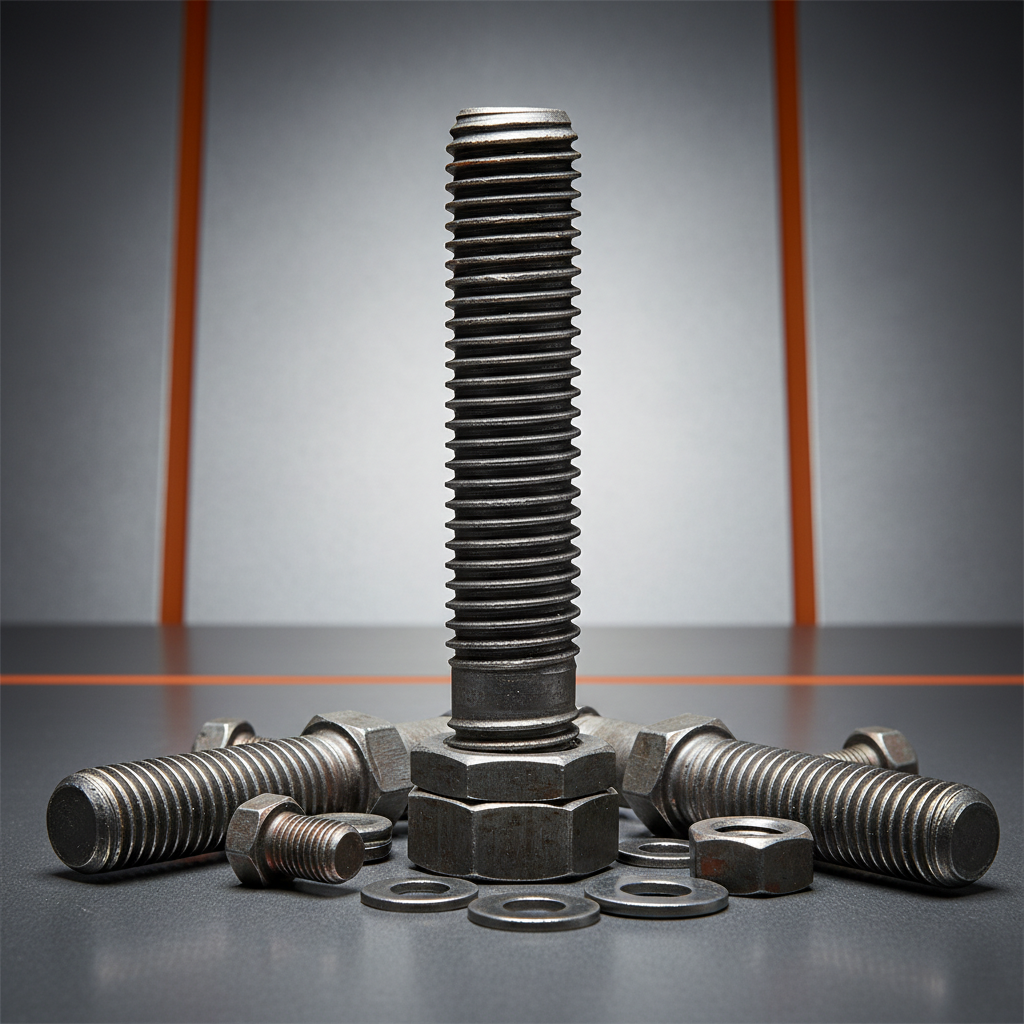
In simple technical terms, a hardened threaded rod is a continuous length of steel that has been subjected to a thermal process (heating and rapid cooling) to increase its Rockwell hardness and tensile strength. Unlike standard bolts, these rods provide a versatile, customizable length that can be cut to fit specific architectural requirements while maintaining the structural integrity of a Grade 8 or Grade 10.9 fastener.
Beyond the metallurgy, these components represent a fusion of precision engineering and material science. By manipulating the carbon content and the cooling rate, manufacturers create a product that resists stripping and shearing. This is particularly vital in humanitarian and civil engineering projects where the cost of replacement is high and the risk of failure is unacceptable.
Essentially, the hardened threaded rod acts as the "skeleton" of heavy-duty assemblies. Whether it is securing a heavy HVAC system in a hospital or stabilizing a bridge girder, its purpose is to translate high clamping force into long-term stability, bridging the gap between simple hardware and specialized engineering components.
Core Components of High-Strength Fastening
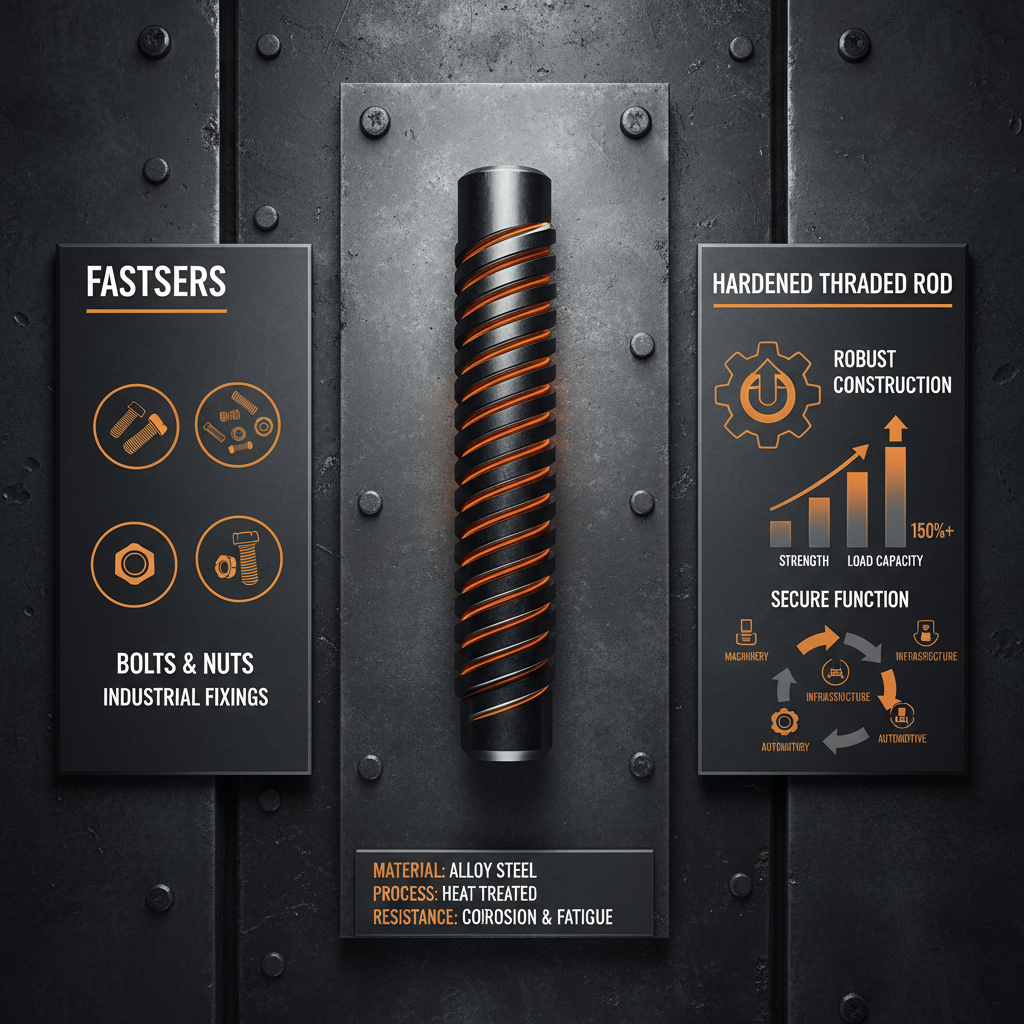
The efficacy of a hardened threaded rod is primarily determined by its Material Composition. The use of alloy steels, such as chrome-moly or boron steel, ensures that the rod can undergo the hardening process without becoming overly brittle, allowing for a high strength-to-weight ratio that is critical in aerospace and automotive applications.
Thermal Treatment Precision is the second pillar of quality. A hardened threaded rod must be quenched and tempered at exact temperatures to achieve the desired martensitic structure. This process removes internal stresses and ensures that the hardness is uniform across the entire length of the rod, preventing "soft spots" that could become failure points.
Finally, Thread Geometry and Tolerance play a decisive role. Even the hardest steel is useless if the threads are not precise. High-quality rods utilize rolled threads rather than cut threads, as rolling compresses the grain flow of the metal, further increasing the fatigue resistance of the hardened threaded rod and reducing the risk of stress corrosion cracking.
Performance Metrics and Comparative Analysis
When evaluating the performance of fastening solutions, the yield strength and shear resistance of a hardened threaded rod are the most critical KPIs. Compared to standard cold-rolled steel, hardened variants can support significantly higher loads before experiencing permanent plastic deformation, which is a non-negotiable requirement for seismic bracing and heavy machinery mounting.
The following data illustrates how different hardening and manufacturing methods impact the overall performance rating of these components. While all variants outperform standard rods, the specific method of hardening—whether it be induction, case-hardening, or through-hardening—determines the rod's suitability for specific environments.
Performance Comparison of Hardened Threaded Rod Variants
Global Applications and Use Cases
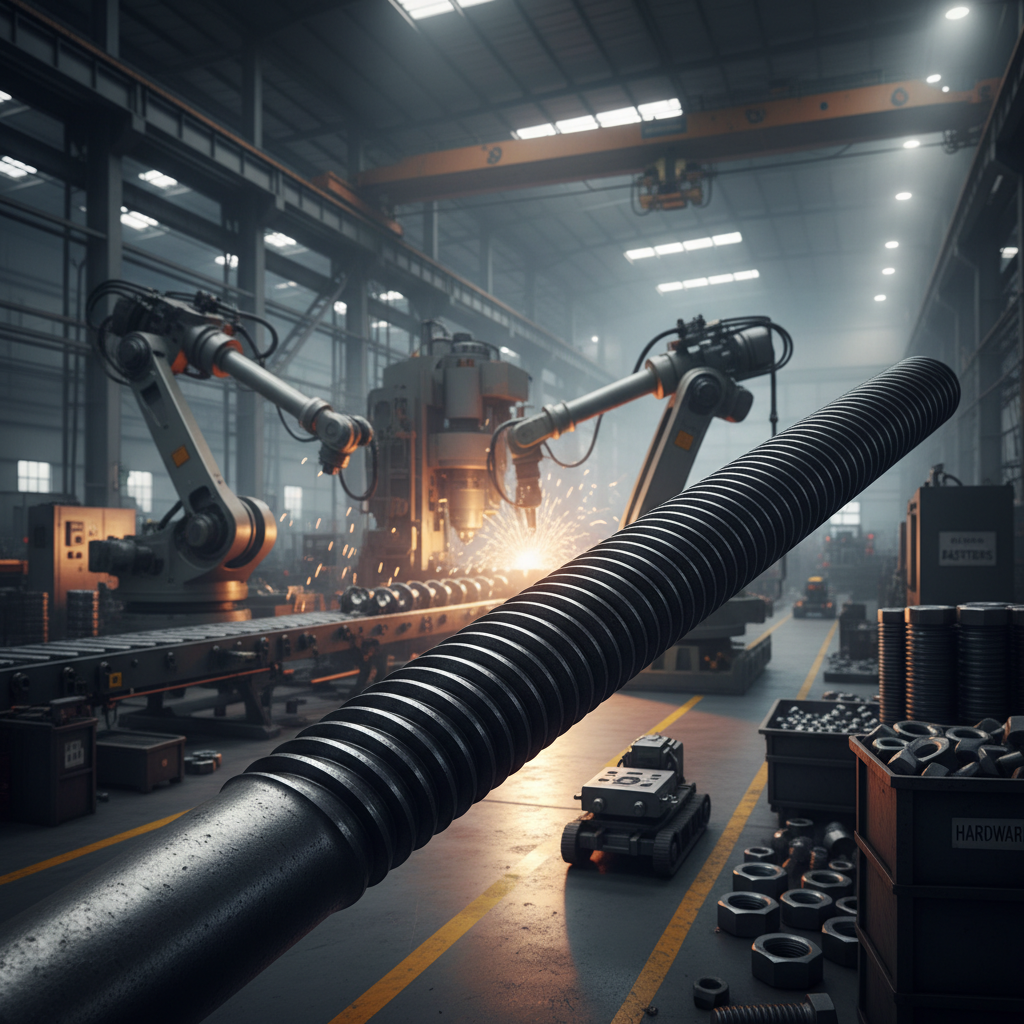
In the realm of industrial infrastructure, the hardened threaded rod is indispensable. In North American oil and gas refineries, these rods are used to secure heavy piping systems that are subject to constant vibration and extreme temperature fluctuations. The hardness ensures that the threads do not vibrate loose or strip over time, preventing hazardous leaks.
Similarly, in the European automotive sector, high-tensile hardened threaded rods are employed in engine mounting and chassis reinforcement. Here, the priority is the ability to absorb sudden impact energy without failing, providing a level of safety that standard fasteners cannot offer, particularly in high-performance or commercial electric vehicle platforms.
Long-Term Value and Reliability Advantages
The true value of investing in a hardened threaded rod is revealed over the product's lifecycle. While the initial cost may be higher than mild steel, the reduction in maintenance intervals and the elimination of premature failures lead to a significantly lower Total Cost of Ownership (TCO). Reliability in this context is not just a technical metric—it is an insurance policy against downtime.
From a psychological perspective, the use of certified hardened fasteners provides peace of mind to project managers and safety inspectors. Knowing that the structural bonds are secured by materials that exceed the maximum theoretical load of the building provides a layer of trust and dignity in the construction process, ensuring that the safety of the end-user is never compromised.
Furthermore, the durability of the hardened threaded rod contributes to sustainability. By extending the life of the assembly and reducing the need for frequent replacements, these components reduce the overall carbon footprint associated with steel production and waste disposal, aligning industrial growth with ecological responsibility.
Future Trends in Threaded Rod Innovation
The future of the hardened threaded rod is being shaped by "Smart Materials" and advanced coatings. We are seeing the emergence of nano-ceramic coatings that provide both extreme surface hardness and superior corrosion resistance, allowing hardened rods to operate in saltwater or acidic environments without the need for bulky galvanization.
Digital transformation is also playing a role through the integration of "Digital Twins." Engineers can now simulate the exact stress point of a hardened threaded rod within a 3D model before it is ever installed, allowing for the optimization of material use and the reduction of over-engineering, which saves both cost and weight.
Moreover, the push for green energy is driving the development of low-carbon steel alloys that can still achieve high hardness levels. As the industry moves toward hydrogen-based steelmaking, the hardened threaded rod will evolve to be not only the strongest link in the chain but also the most sustainable.
Technical Specifications and Material Performance Analysis of Hardened Threaded Rods
| Material Grade |
Hardening Method |
Tensile Strength (MPa) |
Corrosion Resistance |
| Alloy Steel 4140 |
Quench & Temper |
850 - 1100 |
Moderate |
| Chrome-Moly 4130 |
Induction Hardening |
700 - 950 |
High |
| Boron Steel |
Case Hardening |
900 - 1200 |
Low |
| Stainless 316 (H) |
Precipitation Hardening |
600 - 800 |
Very High |
| Carbon Steel 1045 |
Flame Hardening |
500 - 700 |
Moderate |
| High-Tensile Alloy |
Vacuum Heat Treat |
1100 - 1400 |
High |
FAQS
The primary difference lies in the heat treatment. A hardened threaded rod undergoes specific quenching and tempering processes that rearrange its molecular structure, significantly increasing its yield strength and resistance to surface wear. While standard rods are prone to stretching or bending under high loads, hardened rods maintain their shape and tension, making them suitable for critical structural applications.
Yes, soon as the cutting is done using cold-cutting methods. Using high-heat cutting tools (like plasma or oxy-fuel torches) can create a Heat Affected Zone (HAZ) at the tip of the rod, which may soften the steel or introduce brittleness. To preserve the metallurgical integrity of the hardened threaded rod, we recommend using band saws or cold-cutters.
Hydrogen embrittlement is a risk for very high-hardness fasteners. This is prevented through a process called "baking." After any acid pickling or electroplating, the hardened threaded rod should be baked in an oven at a specific temperature (usually around 200°C) for several hours to drive out the trapped hydrogen atoms before the product is put into service.
For saltwater or marine environments, we recommend precipitation-hardened stainless steel (such as 17-4 PH) or alloy steel rods with a high-grade duplex coating. While carbon-based hardened rods offer immense strength, they will corrode quickly without a protective barrier. A combination of hardening for strength and a specialized coating is the ideal solution.
The most accurate way is through a Rockwell Hardness Test or a Brinell Hardness Test using a calibrated hardness tester. For field checks, a file test can provide a rough estimate (hardened steel will resist a standard file), but for industrial compliance, a Mill Test Report (MTR) from the manufacturer is the only professional way to verify the properties of the hardened threaded rod.
In terms of raw material per unit of length, a hardened threaded rod is often more cost-effective because it allows the user to customize the length exactly to the application, reducing waste. While the per-pound price is higher than mild steel due to the heat treatment process, the long-term value in terms of safety and reduced maintenance makes it a more economical choice for industrial use.
Conclusion
The hardened threaded rod is far more than a simple fastener; it is a precision-engineered component that ensures the safety and stability of our most critical infrastructures. From the meticulous selection of alloy steels to the precise control of quenching temperatures, every step in its production is designed to eliminate failure. By prioritizing yield strength, fatigue resistance, and material purity, these rods provide the invisible strength required for modern industrial advancement.
Looking forward, as we move toward smarter cities and more sustainable building practices, the evolution of fastening technology will continue to lean on the principles of high-performance metallurgy. We encourage engineers and procurement officers to move beyond basic specifications and consider the long-term lifecycle value of hardened components. For those seeking the highest standards in fastening reliability, we invite you to explore our professional range. Visit our website: www.hbtbls.com