You know, I’ve been running around construction sites for fifteen years now, getting dust in my teeth and smelling concrete all day. These days, everyone’s talking about prefabrication, modular construction. It's big. Really big. It’s not just a trend, it's a necessity, frankly. Labor shortages, faster turnaround times… people need it. But honestly, most of these prefab guys… they treat fasteners like an afterthought.
That’s where things get tricky. Because it’s the little things that kill you, right? You spec the wrong bolt, the wrong washer, and suddenly your whole schedule is thrown off. It seems small, but it ripples. I've seen entire projects delayed because a critical fastener was backordered. Backordered! In this day and age.
And let me tell you, the demand for quality fastener manufacturers is insane right now. Everyone’s scrambling for reliable suppliers. It's a good time to be in that business, I reckon.
The Current Landscape of Fastener Manufacturers
To be honest, the market is flooded. You’ve got your massive Chinese manufacturers, churning out bolts by the millions. The price is right, sure. But quality control? Forget about it. Then you’ve got the European guys, very precise, very expensive, and sometimes…over-engineered, if you ask me. And then there’s the US fastener manufacturers – a bit of a mix. Some are really good, focusing on specialty fasteners, others are just… surviving. It's tough out there.
Have you noticed how many smaller, regional fastener distributors are popping up? They're filling a need, providing quicker delivery and more personalized service. It’s a good sign, actually. People want responsiveness. They don't want to wait six weeks for a shipment from overseas.
Common Design Pitfalls in Fastener Selection
Strangely enough, a lot of engineers don’t fully understand the forces at play. They'll specify a fastener based on theoretical load calculations, but they don't account for vibration, thermal expansion, or corrosion. I encountered this at a wind turbine factory last time. They were using a standard stainless steel bolt in a critical joint, and it was failing prematurely because of galvanic corrosion. Simple stuff, really, but easily overlooked.
Another big mistake? Underestimating the importance of thread locking. You can’t just assume a bolt will stay put. Loctite is your friend, but even that has limitations. And don't even get me started on self-tapping screws in certain materials… sometimes they just shear off. You need to do your research, understand the materials, and choose the right fastener for the job. It’s not rocket science, but it requires attention to detail.
The biggest pitfall I see is the failure to consider the entire assembly. It’s not just about the fastener itself, but how it interacts with the surrounding materials. A fastener that works perfectly in a lab setting might fail miserably in the real world.
Material Matters: Beyond Just Steel Grades
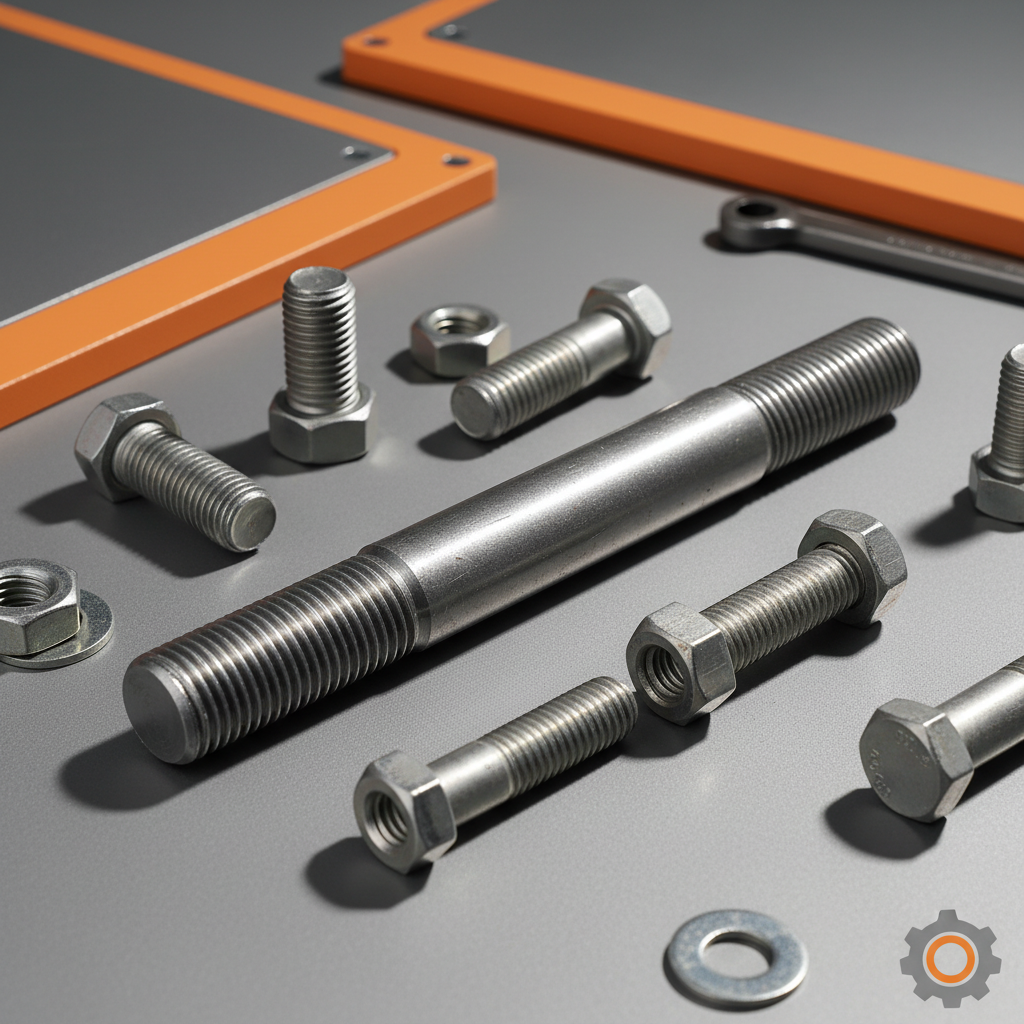
Look, steel is steel, right? Wrong. There’s a huge difference between a cheap carbon steel bolt and a high-strength alloy steel fastener. You can feel it when you handle it. The weight, the finish… And the smell, even! Seriously, some of the cheaper steels have a weird metallic odor. I know, it sounds crazy, but I've spent enough time around metal to notice these things.
We're also seeing a lot more use of exotic materials – titanium, Inconel, even some specialized polymers. These are expensive, obviously, but they offer superior corrosion resistance and strength-to-weight ratios. They’re often used in aerospace and marine applications.
And don’t forget about coatings! Zinc plating, hot-dip galvanizing, PTFE coatings… These can significantly extend the life of a fastener, especially in harsh environments. Choosing the right coating is crucial.
Real-World Testing: It's Not About the Lab
I'll tell you what, lab tests are useful for getting a baseline, but they don’t tell the whole story. I've seen fasteners pass every lab test imaginable and then fail spectacularly on the job site. It's always something unexpected.
What we need is real-world testing. Subject the fasteners to the actual stresses and strains they'll experience in service. That means vibration testing, impact testing, corrosion testing in saltwater… things that simulate real-life conditions. We often just throw some at the wall – alright, I’m kidding… mostly. But you get the idea.
Fastener Manufacturers Reliability Ratings
How Fasteners Are Actually Used on Site
This is where things get interesting. Engineers design these systems, but the guys on the ground… they improvise. I’ve seen guys use impact wrenches on fasteners that are clearly labeled “hand tighten only.” I’ve seen them use the wrong size drill bit, stripping the threads. I've seen them... well, let’s just say they’re resourceful.
And honestly, a lot of times they’re just trying to get the job done quickly. They’re under pressure from the foreman, from the client… they don’t have time to be meticulous. That’s why it’s so important to choose fasteners that are forgiving, that can withstand a bit of abuse.
Advantages and, Let's Be Honest, Disadvantages
Okay, so good fastener manufacturers save time, reduce rework, and improve the overall quality of the finished product. That’s a big win. They also contribute to safety, which is obviously paramount. A failed fastener can have catastrophic consequences.
But they’re not perfect. They're often a small percentage of the overall project cost, so people try to cheap out. And they’re often overlooked during the design phase, leading to problems down the road. It’s a classic case of penny-wise, pound-foolish.
Anyway, I think the biggest advantage is peace of mind. Knowing that your fasteners are up to the task, that they're not going to fail prematurely… that's worth a lot.
Customization and Specific Applications
Now, customization is where things get really interesting. Last month, that small boss in Shenzhen who makes smart home devices insisted on changing the interface to on all his enclosures – he wanted a “premium” look. The result? He had to retool his entire assembly line because the standard fasteners wouldn’t fit. Cost him a fortune.
But customization isn’t always about aesthetics. Sometimes it’s about functionality. We had a client who needed a fastener with a specific head shape to accommodate a tight space. We had to work with a manufacturer to design a custom fastener that met their requirements.
You can get practically anything you want if you're willing to pay for it. Special materials, custom coatings, unique head styles… the possibilities are endless.
Summary of Fastener Performance Metrics
| Fastener Type |
Material Strength (MPa) |
Corrosion Resistance (Rating 1-5) |
Cost per Unit ($) |
| Carbon Steel Bolt |
400 |
2 |
0.10 |
| Stainless Steel Screw |
500 |
4 |
0.25 |
| Aluminum Rivet |
250 |
3 |
0.15 |
| Titanium Fastener |
900 |
5 |
2.00 |
| Brass Screw |
350 |
2 |
0.30 |
| Nylon Bolt |
150 |
5 |
0.20 |
FAQS
Honestly? Underestimating corrosion. People think a little rust is no big deal. It is. It weakens the fastener, compromises the connection, and leads to all sorts of headaches down the road. You need to use corrosion-resistant fasteners, even if it costs a bit more. Stainless steel is good, but even that has its limitations. Sometimes you need to go with something more exotic, like titanium or a specialized coating.
It's huge. Seriously. You can use the most expensive lumber or steel, but if your fasteners are garbage, the whole thing is going to fall apart. I always tell people to spend a little more on fasteners – it's an investment in the long-term reliability of the project. Think of it like this: you wouldn't put cheap tires on a luxury car, would you?
Look for rust, cracks, or deformation. If the threads are stripped, that’s a bad sign. Also, pay attention to any unusual noises – creaking, groaning, or popping. These could indicate that the fastener is under stress. And if you see any movement in the joint, that’s a definite red flag. Act fast before something catastrophic happens.
Self-drilling screws are getting better all the time, especially for metal. Also, there’s a lot of innovation happening in the area of thread locking technology. And some companies are developing fasteners that can actually monitor their own stress levels – pretty cool stuff. But honestly, most of the time you just need a good quality, standard bolt.
That depends on the application. Some fasteners require a specific torque value, which you need to measure with a torque wrench. Others just need to be snug – not too tight, not too loose. The key is to avoid over-tightening, which can strip the threads or damage the materials. A good rule of thumb is to tighten until it feels right. And then check it again later.
Supply chain disruptions, hands down. The pandemic messed everything up, and it’s still causing problems. Getting raw materials, shipping products… it's a nightmare. And then there's the competition from low-cost manufacturers. It's a tough market. But the good ones will survive. The ones who focus on quality and service.
Conclusion
So, there you have it. Fasteners aren’t glamorous, but they’re absolutely essential. They’re the unsung heroes of construction, the glue that holds everything together. Understanding the nuances of fastener selection, material properties, and real-world testing is crucial for ensuring the safety, reliability, and longevity of any project.
Ultimately, whether this thing works or not, the worker will know the moment he tightens the screw. That’s the bottom line. If it feels right, looks right, and holds firm, you’re good to go. If not… well, you’ve got a problem. And if you're looking for reliable fastener manufacturers, you know where to start.