Threaded bar for sale plays a crucial role in modern infrastructure and manufacturing. From construction projects requiring robust support to intricate machinery demanding precise components, the demand for high-quality threaded bars continues to grow globally. Understanding the nuances of threaded bar specifications, materials, and applications is essential for engineers, procurement specialists, and anyone involved in projects reliant on these critical fasteners. The versatility and strength of a properly selected threaded bar for sale are unmatched, ensuring structural integrity and operational reliability.
The global market for threaded bars is substantial, driven by infrastructural development in emerging economies and ongoing maintenance in established nations. According to industry reports, the market is projected to experience steady growth in the coming years, fueled by increased construction activity and a rising demand for specialized fasteners. However, challenges such as material price fluctuations and stringent quality control requirements demand a proactive and informed approach to sourcing threaded bar for sale.
The accessibility of reliable, high-strength threaded bars, like those available for sale from reputable suppliers, directly impacts project timelines, safety, and overall cost-effectiveness. Recognizing the importance of this component, this guide provides a comprehensive overview of threaded bars, covering their characteristics, applications, and future trends.
Introduction to Threaded Bar for Sale
The demand for durable and reliable fasteners is a cornerstone of modern engineering and construction. Threaded bars, available for sale in a multitude of sizes and materials, are integral to a wide range of applications, providing essential support and connection points. Understanding the specific requirements of each project is vital when selecting a threaded bar for sale, considering factors such as load capacity, environmental conditions, and regulatory standards.
Investing in high-quality threaded bars ensures the longevity and safety of any structure or machine. Compromising on quality can lead to catastrophic failures and costly repairs. Therefore, sourcing from trusted suppliers and conducting thorough inspections are paramount.
Defining Threaded Bars and Their Significance
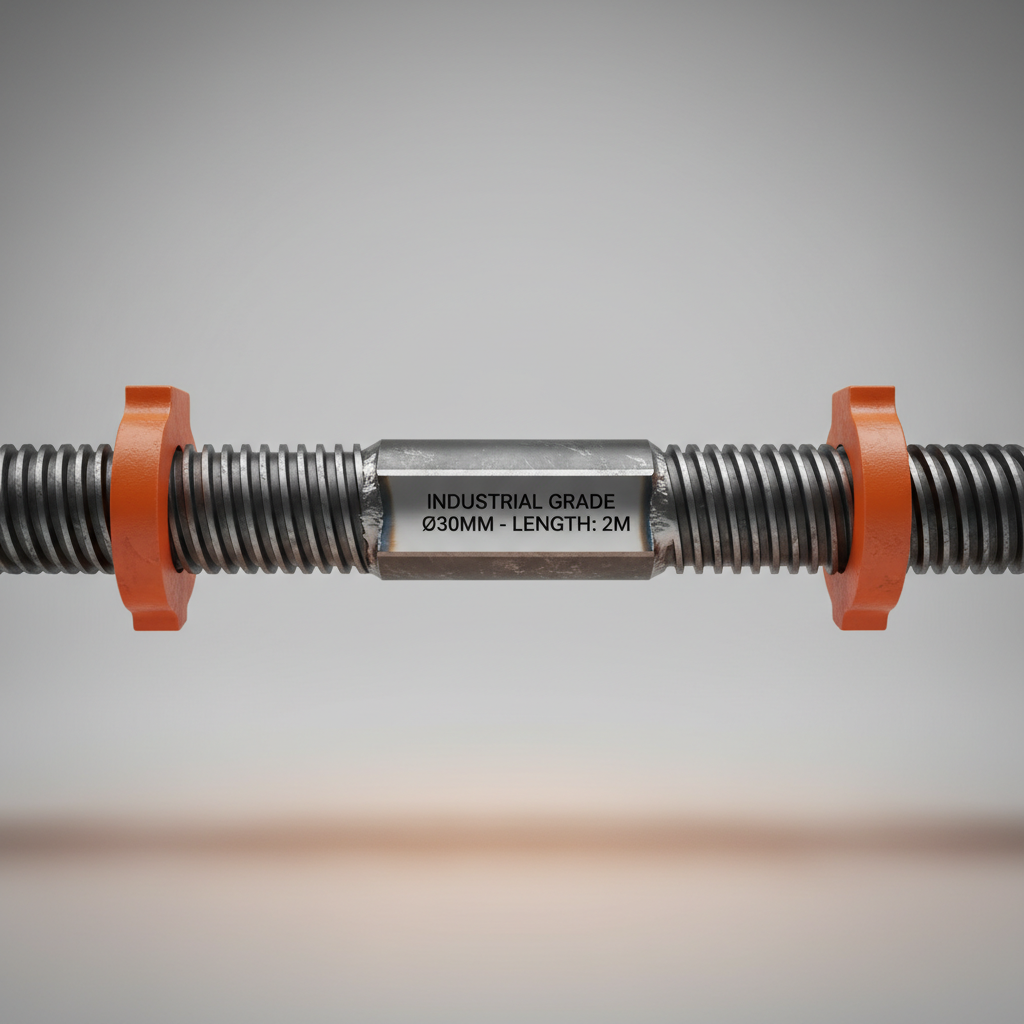
A threaded bar, also known as studding, is a cylindrical rod that is threaded along its entire length or a portion of its length. These bars are designed to be used in tension applications, providing a strong and secure fastening solution. Their versatility stems from their ability to be cut to specific lengths and fitted with various types of nuts and washers. The significance of a well-manufactured threaded bar for sale lies in its ability to distribute load evenly, preventing stress concentrations that can lead to failure.
The precision of the threading is critical. Threads must conform to standardized specifications (such as ISO, ASTM, or DIN) to ensure compatibility with corresponding nuts and washers. This standardization promotes interchangeability and simplifies assembly processes.
In modern industry and humanitarian efforts alike, threaded bars facilitate essential tasks. From building bridges and skyscrapers to constructing temporary shelters in disaster relief operations, these components enable progress and provide crucial safety and stability.
Core Properties of Quality Threaded Bar for Sale
When evaluating a threaded bar for sale, several core properties determine its suitability for a given application. These include material composition, tensile strength, yield strength, and corrosion resistance. Carbon steel is a common material choice due to its high strength and affordability, but stainless steel and alloy steels are often preferred in corrosive environments or high-temperature applications.
Tensile strength refers to the amount of tensile stress a bar can withstand before breaking, while yield strength indicates the point at which it begins to deform permanently. Higher values for both properties signify a stronger and more durable bar. Understanding these specifications is crucial for ensuring structural integrity and preventing failures.
Furthermore, the thread pitch and accuracy are paramount. A consistent and accurate thread ensures a secure and reliable connection. Variations in thread dimensions can lead to loosening, stripping, or premature failure of the fastener. Quality control measures during manufacturing are essential to maintain these critical properties.
Applications Across Diverse Industries
The versatility of threaded bars extends across a vast spectrum of industries. In construction, they are used for anchoring, reinforcing concrete, and securing structural elements. The manufacturing sector utilizes them in machinery assembly, providing secure connections for moving parts and supporting heavy loads.
The automotive industry relies on threaded bars for engine components, suspension systems, and chassis assembly. The aerospace sector requires high-precision, high-strength threaded bars for critical aircraft structures and engine parts. Even in renewable energy projects, such as wind turbine installations, threaded bar for sale play a crucial role in securing the massive turbine blades and supporting structures.
Application Specific Threaded Bar Performance
Advantages of Using Threaded Bar for Sale
Utilizing threaded bars presents several key advantages over alternative fastening methods. Their high tensile strength provides exceptional load-bearing capacity, making them ideal for critical applications where structural integrity is paramount. Furthermore, their adjustability allows for precise alignment and tensioning, ensuring optimal performance.
Compared to welding, threaded bar connections are non-destructive, preserving the material properties and reducing the risk of weakening the structure. They also offer ease of disassembly and maintenance, simplifying repairs and modifications. A correctly specified threaded bar for sale provides a long-lasting and reliable fastening solution.
Future Trends in Threaded Bar Technology
The future of threaded bar technology is geared towards enhanced performance and sustainability. Research and development are focusing on advanced materials, such as high-strength alloys and composite materials, to increase load capacity and reduce weight. Digitalization and automation are also playing a role, with the implementation of smart fasteners that incorporate sensors to monitor stress levels and predict potential failures.
The increasing demand for sustainable construction practices is driving the development of eco-friendly threaded bars made from recycled materials and manufactured using energy-efficient processes.
Challenges and Solutions in Sourcing
One of the primary challenges in sourcing threaded bars is ensuring consistent quality and adherence to industry standards. Counterfeit products and substandard materials can compromise structural integrity and lead to costly failures. Establishing robust quality control procedures and working with reputable suppliers are crucial steps in mitigating this risk.
Supply chain disruptions and fluctuating material prices also pose challenges. Diversifying sourcing options and establishing long-term contracts with trusted vendors can help stabilize costs and ensure a reliable supply of threaded bar for sale.
Implementing thorough inspection protocols and material certifications can further enhance quality assurance and provide peace of mind.
Summary of Challenges & Solutions
| Challenge |
Impact |
Solution |
Implementation Cost (1-10) |
| Counterfeit Products |
Structural Failure, Safety Risks |
Rigorous Supplier Qualification |
6 |
| Quality Inconsistencies |
Reduced Performance, Premature Wear |
Enhanced Inspection Protocols |
7 |
| Supply Chain Disruptions |
Project Delays, Increased Costs |
Diversified Sourcing Network |
5 |
| Material Price Volatility |
Budget Overruns |
Long-Term Contracts |
4 |
| Lack of Material Certification |
Compliance Issues |
Require Certificates of Conformity |
3 |
| Incorrect Thread Specifications |
Assembly Problems |
Detailed Order Specifications |
2 |
FAQS
Common material grades for threaded bars include carbon steel (such as Grade 5 and Grade 8), stainless steel (304, 316), and alloy steels. Carbon steel offers high strength at a lower cost, while stainless steel provides excellent corrosion resistance. Alloy steels combine strength with improved toughness and resistance to specific environmental factors. The optimal choice depends on the intended application and environmental conditions, often guided by project specifications or engineering requirements.
Determining the correct length requires careful consideration of several factors. Measure the total distance the bar needs to span, including any required overlap or allowance for nuts and washers. Account for any necessary penetration depth into materials being connected. It’s always advisable to add a small margin for error to ensure proper fit and avoid potential issues during assembly. Precise measurements are critical for maintaining structural integrity.
UNC (Unified National Coarse) and UNF (Unified National Fine) refer to different thread pitches. UNC threads have fewer threads per inch, making them faster to assemble but less resistant to loosening due to vibration. UNF threads have more threads per inch, providing greater resistance to loosening and finer adjustment capabilities. The choice between UNC and UNF depends on the application’s specific requirements regarding vibration, adjustability, and assembly speed.
To prevent corrosion, store threaded bars in a dry, indoor environment away from direct sunlight and moisture. Applying a protective coating of oil or grease can provide an additional layer of protection, especially for carbon steel bars. Avoid stacking bars directly on the floor, use pallets or racks to elevate them and allow for air circulation. Proper storage practices significantly extend the lifespan and usability of the bars.
Look for certifications like ISO 898-1, ASTM F1554, or DIN 933/934, which demonstrate adherence to quality and performance standards. A Certificate of Conformity (COC) verifies that the bars meet specified material and dimensional requirements. Traceability information, such as material test reports, is also valuable for ensuring quality assurance and regulatory compliance. Choosing certified products provides peace of mind.
Yes, but the material selection is critical. Carbon steel bars are susceptible to corrosion in harsh environments. Stainless steel grades like 304 and 316 are excellent choices due to their superior corrosion resistance. For extremely corrosive environments, specialized alloys like duplex stainless steel or Hastelloy may be required. Applying protective coatings, such as galvanizing, can also extend the lifespan of carbon steel bars in moderately corrosive conditions.
Conclusion
In conclusion, threaded bar for sale represents a foundational element in countless industries, providing reliable and versatile fastening solutions. Understanding their properties, applications, and future trends is essential for professionals involved in construction, manufacturing, and beyond. Prioritizing quality, adhering to industry standards, and embracing innovative materials are key to maximizing performance and ensuring long-term structural integrity.
Looking ahead, advancements in materials science and automation promise even more efficient and sustainable threaded bar technologies. By staying informed and partnering with reputable suppliers, stakeholders can leverage the full potential of these critical components to build a more resilient and innovative future.