
Understanding the m30 Threaded Rod: Why This Simple Component Matters Globally
In the vast world of industrial hardware, the m30 threaded rod might not be the star of the show, but it's definitely one of the unsung heroes. At first glance, it seems like just a long metal rod with threads, but dig a little deeper and it turns out to be a remarkably versatile component critical to construction, manufacturing, even humanitarian aid projects worldwide.
Industries depend on reliable connectors for everything from towering skyscrapers to remote off-grid solar setups. Understanding why the m30 threaded rod grabs center stage offers insight into safety, longevity, and cost-efficiency across a range of applications. Plus, as projects scale globally, knowing your threaded rods means smoother execution and fewer headaches, frankly.
Global Impact: Why the m30 Threaded Rod Hits the Big Stage
To appreciate the importance of the m30 threaded rod globally, let's look at where metal fasteners fit in the broader economy. According to ISO standards and trade data from the World Bank, construction and infrastructure spending reached trillions of dollars annually — underpinning that growth are millions of bolts, nuts, and rods like the m30 threaded rod.
A 2023 UN report noted major infrastructure initiatives in developing countries hinge on durable, standardized components to ensure long-term resilience. The challenge? Supplying standardized parts that work reliably under diverse environmental stresses — from arid deserts to coastal humidity, and even seismic zones.
In short, a mislabeled or subpar threaded rod can mean project delays, safety risks, and higher costs. Maintaining uniform standards like those defining the m30 threaded rod’s specs helps combat this.
Defining the m30 Threaded Rod: Technical Yet Simple
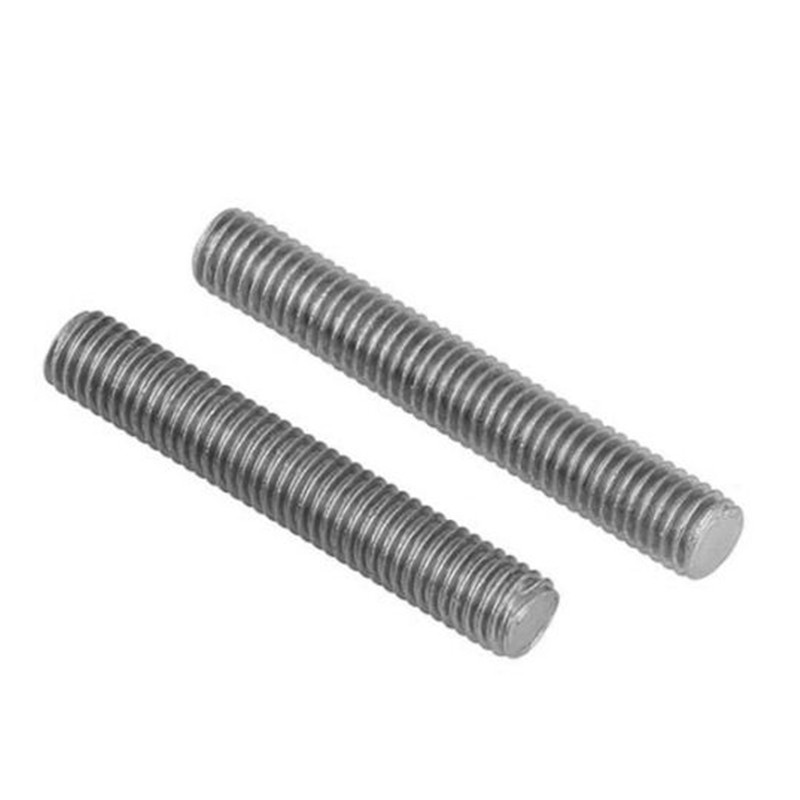
So what exactly is an m30 threaded rod? Simply put, it’s a cylindrical metal rod that’s threaded along its entire length with metric “M30” sizing — meaning the nominal diameter is around 30 millimeters. These rods come in various lengths, materials (commonly steel or stainless steel), and grades to suit different loads and environments.
Why threaded fully? This allows nuts to fasten anywhere along its length or sections to be cut to custom sizes. Industries love this flexibility - from heavy machinery assemblies to quick-building modular designs, including those used in disaster relief shelters.
Oddly enough, this simple steel rod keeps everything from bridges to truck chassis together — it’s like a reliable spine, invisible but vital.
Key Characteristics and Components
1. Durability Under Stress
The m30 threaded rod’s strength is measured by its tensile grade, often classified under ISO or ASTM standards. For structural uses, rods with higher grades resist tension and shear forces. Many engineers say getting the rod’s grade right is like picking shoes for a marathon: wrong fit, and you limp or risk injury.
2. Scalability and Length Options
Typically produced in lengths from half a meter to over three meters, m30 rods are cut and customized on-site or supplied in standard sizes. This scalability reduces waste and simplifies logistics — particularly important in bulk infrastructure projects or emergency builds.
3. Corrosion Resistance
Depending on the environment, rods are coated – galvanized, zinc-plated, or stainless steel variants exist. Coastal or industrial zones favor corrosion-resistant variants to avoid rust, prolonging lifecycle and reducing maintenance.
4. Cost Efficiency
Because these rods standardize assembly and reduce the need for welding or complex joints, they save time and money. The price/performance ratio is often a key selling point — especially for large volume buyers in the energy or construction sectors.
Mini takeaway: The m30 threaded rod’s strength, adaptability, and resistance to harsh environments make it a fundamental industrial component—simple, yet clever.
Global Applications & Real-World Use Cases
The beauty of the m30 threaded rod is in its portability across sectors and geographies. Consider:
- Construction: Supporting beams, mounting heavy equipment, and fastening concrete formworks.
- Renewable Energy: Fixing solar panels on uneven terrain, where adjustable lengths and strong fittings matter.
- Disaster Relief: Rapid deployment shelters use these rods in the framework because they’re sturdy, easy to transport, and simple to assemble without special tools.
- Industrial Machinery: Mounting and aligning motors, pumps, and heavy mechanical parts.
- Infrastructure Repairs: Used in seismic retrofitting projects in Asia and Latin America to reinforce vulnerable structures.
The m30 threaded rod is truly a global citizen, quietly acting in construction sites from Germany’s autobahns to remote mining camps in Australia.
Advantages & Long-Term Value
Why should anyone care about these rods beyond their technical specs? It’s about the bigger picture:
- Reliability and Safety: The right threaded rod ensures structural integrity, meaning less risk of failure that can cost lives and millions in repairs.
- Sustainability: By choosing corrosion-resistant and recyclable materials, the m30 threaded rod contributes to greener construction.
- Cost Savings: Ease of replacement, reduced labor, and fewer delays translate directly into lower project budgets.
- Trust and Innovation: Engineers trust standardized components like these to innovate quickly without worrying about hardware compatibility.
Future Trends & Innovations You Should Know
The humble m30 threaded rod isn't standing still. Manufacturing advancements bring:
- New Coatings: Nano-ceramic and anti-corrosive coatings promise even longer lifespans.
- Smart Fasteners: Sensors embedded in rods to monitor tension and detect fatigue before catastrophic failure.
- Eco-Friendly Materials: Increased use of recycled steels and environmentally responsible finishing processes.
- Digital Supply Chain: RFID tagging and blockchain-based provenance tracking enhance quality assurance globally.
It’s fascinating to think a product designed over a century ago is morphing to meet 21st-century eco and digital challenges.
Common Challenges and How Industry Tackles Them
While reliable, m30 threaded rods still face hurdles:
- Corrosion in extreme environments: Ongoing R&D into coatings and alloy compositions helps address this.
- Supply chain inconsistencies: Digital traceability and vendor vetting improve quality but need wider adoption.
- Installation errors: Training and modular designs aim to reduce human error in the field.
Many companies now invest in better supplier audits and user education, which frankly makes all the difference over time.
Practical FAQs About the m30 Threaded Rod
- Q: What is the typical load capacity of an m30 threaded rod?
- A: It depends on the material grade, but typically an m30 rod can safely handle loads from 20 to 40 tons in tension. Exact specs are available in grade tables per ISO 898-1 standards.
- Q: Can I cut an m30 threaded rod to size without losing structural integrity?
- A: Yes, rods are often custom-cut. However, it’s advised to file or re-thread the cut ends to avoid weakness or corrosion points.
- Q: How does the m30 threaded rod compare to other sizes like m20 or m24?
- A: The m30 has a larger diameter, meaning greater load capacity and thicker threads. It suits heavy-duty applications where strength is a priority over weight or space.
- Q: Which industries benefit most from using m30 threaded rods?
- A: Heavy construction, renewable energy, industrial machinery, and emergency shelter manufacturing commonly rely on m30 rods for durability and ease of installation.
- Q: What maintenance do m30 threaded rods require in corrosive environments?
- A: Routine inspection for rust, reapplication of protective coatings, and replacement of compromised rods ensure safety and longevity.
Product Specification: Typical m30 Threaded Rod
| Specification | Details |
|---|---|
| Diameter | 30 mm (Metric M30) |
| Length | 0.5 m – 3 m (custom cut available) |
| Material | Carbon steel, stainless steel, galvanized steel |
| Thread Pitch | 3.5 mm (standard coarse thread) |
| Tensile Strength | Up to 1,200 MPa (depending on grade) |
| Coating | Zinc plated, galvanized, or plain finish |
Vendor Comparison: Popular m30 Threaded Rod Suppliers
| Supplier | Material Options | Grade & Certification | Typical Lead Time | Price Range (USD/m) |
|---|---|---|---|---|
| Supplier A | Carbon Steel, Stainless Steel | ISO 898-1 Grade 8.8 | 1-2 weeks | $15 - $25 |
| Supplier B | Galvanized Steel Only | ASTM A193 Grade B7 | 2-3 weeks | $12 - $20 |
| Supplier C | Stainless Steel, Carbon Steel | DIN EN 10269 Grade 10.9 | 3-5 days (stocked) | $18 - $28 |
Wrapping Up
The m30 threaded rod might seem like just another piece of hardware, but once you consider its global footprint—from giants of infrastructure projects to nimble emergency shelters—it’s clear these rods are essential building blocks of modern industry and humanitarian work alike. Durability, flexibility, and ongoing innovation ensure the m30 threaded rod remains a staple for decades to come.
If your projects require dependable fastening solutions with proven performance, exploring options and suppliers of m30 threaded rod is a smart step. After all, it’s the details that keep the huge things standing.
References:
1. ISO 898-1: Mechanical properties of fasteners.
2. United Nations Infrastructure Development Reports, 2023.
3. World Bank Global Infrastructure Pipeline Data.
Post time: Dec . 01, 2025 04:35


 English
  Albanian
  Arabic
  Armenian
  Azerbaijani
  Belarusian
  Bosnian
  Bulgarian
  Cebuano
  Corsican
  Czech
Czech  Galician
  Georgian
  Greek
Greek  Hausa
Hausa  Hebrew
  Hungarian
  Igbo
Igbo  Indonesian
  Italian
  Kazakh
  Khmer
Khmer  Korean
  Kurdish
  Kyrgyz
  Lao
Lao  Latin
Latin  Latvian
  Lithuanian
  Malay
Malay  Myanmar
  Nepali
  Polish
  Portuguese
  Russian
  Serbian
  Sesotho
  Shona
Shona  Sindhi
  Spanish
  Tagalog
  Tajik
Tajik  Thai
Thai  Turkish
  Turkmen
  Ukrainian
  Uzbek
Uzbek  Vietnamese
  Yoruba
  Zulu
Zulu