

Why B7 Threaded Rods Are Still the Go-To in Industrial Applications
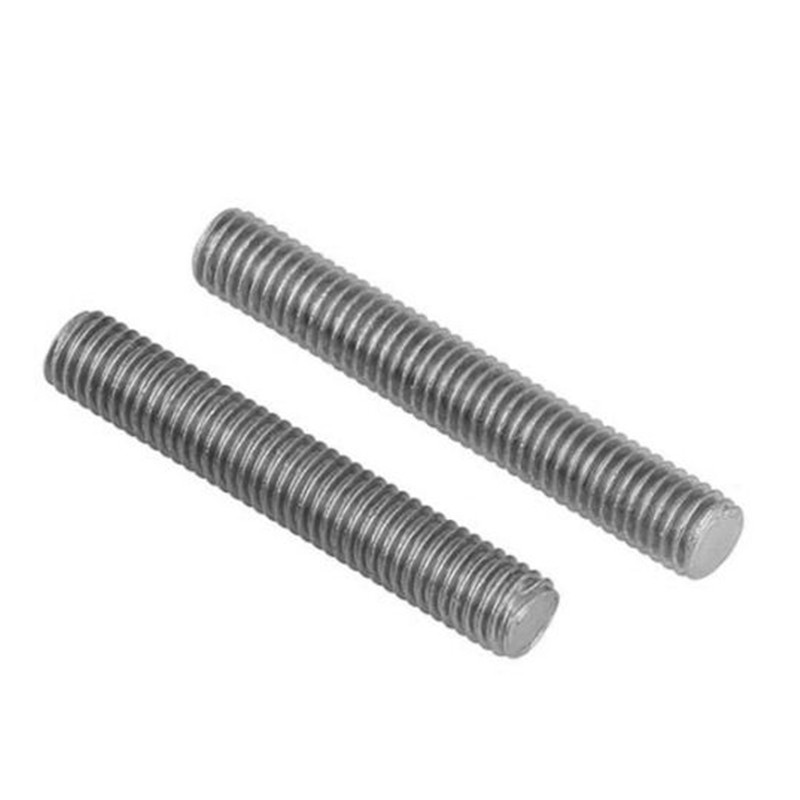
Over the years, I’ve seen countless fasteners come and go, but the B7 threaded rod remains a staple in heavy-duty mechanical joints. Why? It’s the kind of product that quietly delivers performance without much fuss — and frankly, in industries where downtime equals dollars lost, that reliability is priceless.
I remember installing these rods in a power plant retrofit years ago. The plant operators were initially skeptical, more comfortable with standard carbon steel rods. But after a few months, when there were zero failures under extreme conditions — high temperatures, vibration, and corrosive atmospheres — they became believers. B7 rods are made from chromium-molybdenum alloy steel, heat-treated for strength and toughness. That’s not just a marketing blurb; it plays out vividly in real-world stress tests.
Understanding the Material and Design Behind B7 Threaded Rods
The ASTM A193 Grade B7 specification is kind of the backbone here. It demands high tensile strength—roughly 125 ksi minimum. This ensures the rods can handle heavy tension loads without the risk of snapping or deforming. And since they’re often used in conjunction with B16 or B8 nuts, compatibility matters; you don’t want a fastener system where the rod is stronger than the nut or vice versa.
Oddly enough, the heat treatment, which often gets overlooked, is crucial. It gives the rod the perfect balance between hardness and flexibility. Overly hard, and you risk brittleness; too soft, and you lose strength. The steel’s alloying elements also add corrosion resistance—not stainless steel level, but enough for many industrial environments. If you’re in marine or chemical plants, you might consider coating options, but B7 always forms a dependable base.
| Specification | Value / Detail |
|---|---|
| Material | Chromium-Molybdenum Alloy Steel |
| ASTM Standard | ASTM A193 Grade B7 |
| Tensile Strength | 125 ksi (minimum) |
| Yield Strength | 105 ksi (minimum) |
| Heat Treatment | Quenched and Tempered |
| Common Sizes | 1/4" to 2" diameter; lengths customizable |
| Finish Options | Plain, zinc-plated, hot-dip galvanized |
How to Choose the Right Supplier for B7 Threaded Rod
In my experience, not all suppliers are created equal. You want someone who not only stocks a wide range of B7 rods but also understands the subtleties — like heat treatment certifications, traceability to production batches, and customer support if something doesn't fit quite right on-site.
Here’s a quick vendor comparison I put together, which many engineers swear by when selecting suppliers for high-tensile rods:
| Supplier | Inventory Range | Certifications | Lead Time | Custom Lengths? |
|---|---|---|---|---|
| HBT BLS | Full range, 1/4" - 2" | ASTM A193 Compliance + Heat Certs | 2-3 days | Yes |
| Classic Rod Supply | Limited sizes, mainly 1/2" - 1" | Basic Certs on Request | 1 week | No |
| MetalPro Fasteners | Wide range, including stainless options | Certified to ASTM, ISO 9001 | 3-4 days | Yes |
Picking the right supplier not only saves time but can prevent headaches down the line. I've found that having the supplier on speed dial who can answer quick technical questions—say, on torque specs or compatible coatings—is a massive advantage in tight project schedules.
Final Thoughts on Using B7 Threaded Rods
If you’re in the market for reliable, high-strength fastening solutions, B7 threaded rods are a classic and proven choice. They fit the bill when you need tough, durable rods that can handle high-stress environments without drama. Of course, they’re not for every job — sometimes stainless steel or even custom alloys make more sense.
But for industrial machinery, pressure vessels, and structural applications? I still default to B7 first. It feels like the fastening world's equivalent of a well-seasoned work boot—sturdy, tough, and ready for just about anything.
Thanks for sticking around—if you want to dig in deeper, there are plenty of test reports and case studies out there. Personally, I like to measure fastener performance by how many unexpected breakdowns don’t happen. That silent success speaks volumes.
References:
1. ASTM International, ASTM A193/A193M-19
2. Machinery’s Handbook, 30th Edition
3. HBT BLS Product Data and Supplier Certifications
Post time: Nov . 13, 2025 14:00


 English
  Albanian
  Arabic
  Armenian
  Azerbaijani
  Belarusian
  Bosnian
  Bulgarian
  Cebuano
  Corsican
  Czech
Czech  Galician
  Georgian
  Greek
Greek  Hausa
Hausa  Hebrew
  Hungarian
  Igbo
Igbo  Indonesian
  Italian
  Kazakh
  Khmer
Khmer  Korean
  Kurdish
  Kyrgyz
  Lao
Lao  Latin
Latin  Latvian
  Lithuanian
  Malay
Malay  Myanmar
  Nepali
  Polish
  Portuguese
  Russian
  Serbian
  Sesotho
  Shona
Shona  Sindhi
  Spanish
  Tagalog
  Tajik
Tajik  Thai
Thai  Turkish
  Turkmen
  Ukrainian
  Uzbek
Uzbek  Vietnamese
  Yoruba
  Zulu
Zulu