
The Unseen Backbone: Why Understanding M10 Threaded Bar Matters Globally
At first glance, an m10 threaded bar might seem like just a simple piece of metal — a sturdy rod with threads, kind of like a giant screw without a head. But these bars are quietly everywhere, propping up enormous skyscrapers, securing factory equipment, and even aiding humanitarian relief efforts. They form one of the most fundamental building blocks in global construction and industrial manufacturing.
Why should we care? Because threading the right materials and specifications into core infrastructure literally shapes economies, safety standards, and even disaster resilience worldwide. The more we understand about the humble M10 threaded bar — its specs, its applications — the better we grasp how modern society holds together. Plus, for engineers and procurement folks, choosing the right threaded bar versus a cheaper substitute can make or break costly projects.
Introduction: The Global Relevance of M10 Threaded Bar
Threaded rods — and the M10 size in particular — rank among the most widely used fasteners worldwide. According to ISO standards, the M10 specification identifies an outer thread diameter of 10 millimeters, typically on steel rods. These fasteners see use in everything from European high-rises to Asian manufacturing plants.
On a macro level, data from engineering supply chains suggest that demand for standardized threaded rods grows steadily—roughly 3–5% annually—driven by booming construction and industrialization in emerging economies (World Steel Association reports). Yet, the challenge remains: many projects suffer from supply inconsistencies, varying steel grades, or improper sizing, delaying timelines or compromising safety.
As global infrastructure projects become more complex, understanding the reliability, specifications, and sourcing options for products like the M10 threaded bar is no longer just a technical detail — it’s a critical factor in project success and worker safety.
What is an M10 Threaded Bar? A Simple Definition
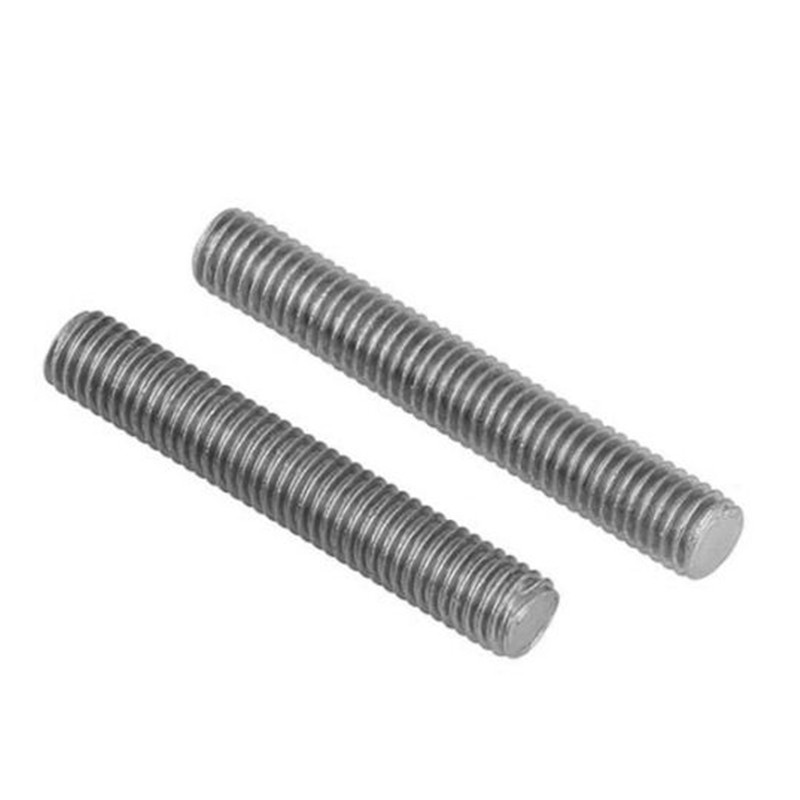
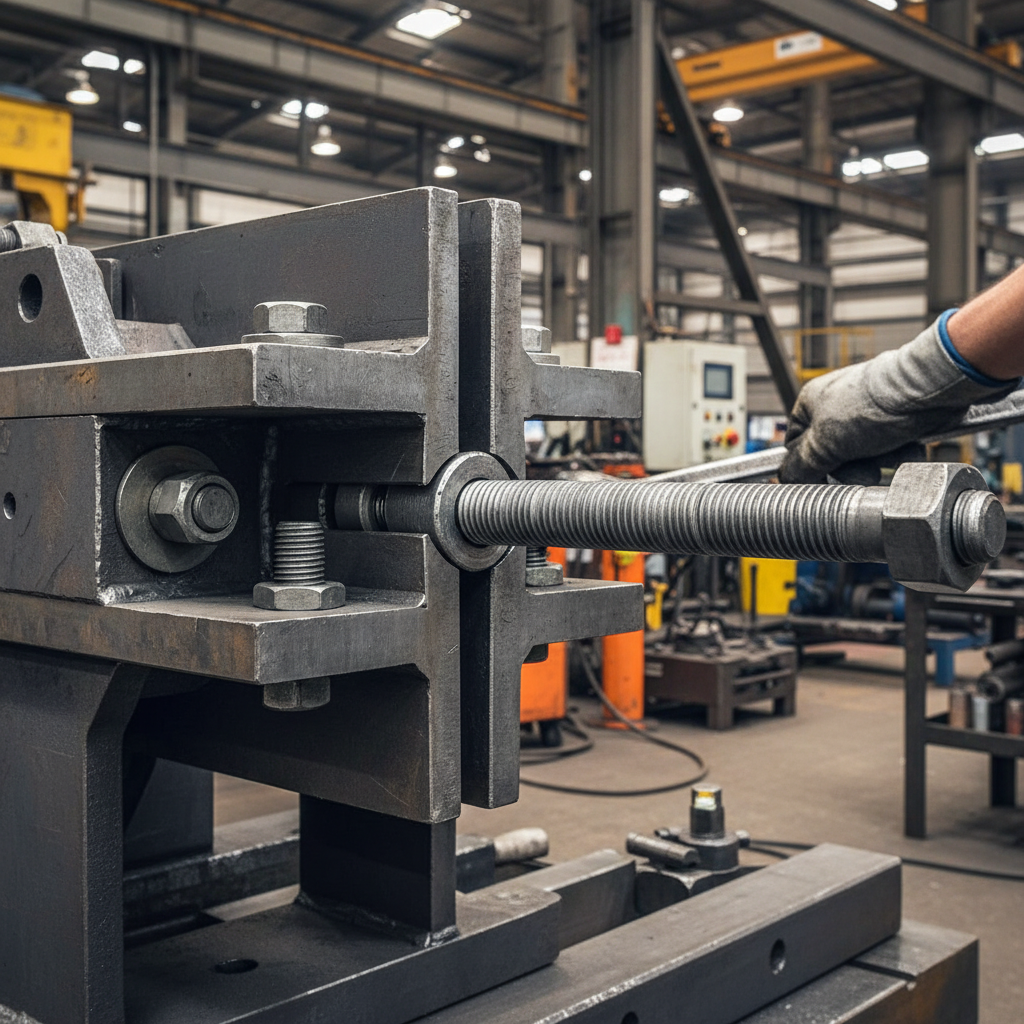
In simple terms, an M10 threaded bar is a steel rod with continuous threads running along its body, measuring 10 millimeters in diameter. These threads enable nuts and other fasteners to secure components tightly. Think of it as the industrial version of a giant screw that connects steel parts precisely.
Its standardization means an M10 threaded bar can be universally used across industries, from mechanical assembly lines to construction scaffolding or even temporary shelters. The “M” denotes metric threads, which have mostly replaced older inch-based systems owing to precision and ease of manufacturing.
Beyond industry, these bars sometimes support humanitarian missions. For example, structural frames in emergency shelters often rely on such rods for quick assembly, proving their quiet but crucial role in crisis zones.
Key Factors in Choosing an M10 Threaded Bar
Material Grade & Durability
Most M10 threaded bars are made from carbon steel, stainless steel, or alloy steel. Carbon steel offers good strength but can rust quickly if untreated. Stainless steel, while pricier, resists corrosion — perfect for marine and outdoor industrial applications. Engineers usually choose materials based on environment and tensile strength requirements.
Thread Pitch & Compatibility
Thread pitch (the distance between threads) dictates the nut compatibility and load distribution. Most M10 bars use a standard 1.5 mm pitch, but fine and coarse thread variants exist for precise applications.
Length & Customization
Standard lengths for M10 threaded bars range from 1 meter up to 6 meters, but custom cuts are common in specialized projects. Flexibility here helps reduce wastage and tailor assembly processes.
Surface Finish & Coatings
Coatings like zinc plating or galvanizing protect against rust and increase longevity. In fact, hot-dip galvanized M10 bars are favored in outdoor frameworks. Surface finish can also impact handling safety and aesthetics.
Load Capacity & Tensile Strength
Load-bearing capability matters especially in high-stress environments. Typical M10 steel rods offer tensile strengths between 400 and 900 MPa, depending on grade and treatment.
Mini Takeaway: When selecting an M10 threaded bar, it’s less about picking the cheapest rod and more about balancing material, threading, and durability to fit specific project demands.
Global Applications & Use Cases of M10 Threaded Bars
From the skyscrapers in New York to offshore wind farms in Europe, the M10 threaded bar turns up everywhere. Its versatility spans:
- Construction: Holding rebar cages, bolting steel frames, and securing concrete formwork.
- Manufacturing: As fasteners on heavy machinery, assembly lines, and conveyor belts.
- Infrastructure & Utilities: Electrical towers and bridge railings rely on threaded bars for stability.
- Emergency & Temporary Shelters: Due to ease of assembly, M10 rods help assemble modular housing units in disaster zones.
Regions with rapid infrastructure expansion, like Southeast Asia and parts of Africa, see increased demand for standardized, corrosion-resistant M10 bars. Even the automotive sector sometimes specifies threaded rods for mounting and fixing operations.
Consider a case from Mozambique after cyclone impacts: relief teams deployed m10 threaded bar components to rapidly construct durable shelters, reducing setup times dramatically and improving structural safety.
Product Specification Table: Typical M10 Threaded Bar
| Specification | Details |
|---|---|
| Diameter | 10 mm |
| Thread Pitch | 1.5 mm (standard), fine/coarse variants |
| Material Grade | Carbon Steel, Stainless Steel, Alloy Steel |
| Length Options | 1 – 6 meters (custom cuts available) |
| Tensile Strength | 400 – 900 MPa |
| Surface Finish | Plain, Zinc-Plated, Hot-Dip Galvanized |
Vendor Comparison: Popular M10 Threaded Bar Suppliers
| Vendor | Materials Offered | Customization Options | Pricing | Global Shipping |
|---|---|---|---|---|
| SteelFast Inc. | Carbon, Stainless | Length & Thread Pitch | Midrange | Yes (Worldwide) |
| Global Threads | All grades including Alloy | Custom Lengths & Finishes | Premium | Regional (Asia, Europe) |
| BoltWorld | Carbon Steel Only | Standard Sizes & Lengths | Budget-Friendly | Limited, Mostly Local |
Advantages and Long-Term Value of M10 Threaded Bars
What really sets the M10 threaded bar apart isn’t just its metal makeup but this combined package: affordability, strength, versatility, and availability. Compared to welded or custom connectors, threaded bars allow quicker assembly and disassembly, cutting labor costs and downtime.
From a sustainability perspective, choosing galvanized or stainless steel M10 bars extends the lifespan of structures, lowering replacement frequency — a subtle but big environmental win. In human terms, reliable infrastructure brings safety, security, and dignity, whether on a busy highway or an emergency shelter site.
Frankly, many engineers I've talked to say a properly specified M10 threaded bar is one of those deceptively simple parts that makes or breaks project timelines and trust in your build.
Future Trends & Innovations in Threaded Bar Technology
The fastener industry isn’t quite the glam side of tech, but trends are creeping in. Advances in materials science mean high-strength, corrosion-resistant alloys that shrink the weight without sacrificing toughness. Some manufacturers now use eco-friendly zinc alternatives or even polymer coatings to boost sustainability.
Beyond materials, digital tracking and quality control — powered by blockchain or IoT sensors — are beginning to assure clients about the provenance and specs of each batch of M10 threaded bars. This level of transparency could reshape global supply confidence.
Automation, too, is speeding up threading and finishing, enabling just-in-time supply chains that reduce warehousing and waste.
Common Challenges & Practical Solutions
Problems with M10 threaded bars mostly relate to inconsistencies in quality, corrosion issues, or difficulties in matching thread compatibility. Importers sometimes get stuck with sub-par material that fails safety tests.
The good news: certification from bodies like ISO 898 ensures minimum material standards. Plus, working with reliable suppliers who offer testing documentation and sample batches can head off many pitfalls early.
FAQ: Frequently Asked Questions About M10 Threaded Bar
-
Q: What thread pitch does an M10 threaded bar typically have?
A: Most common M10 threaded bars have a 1.5 mm thread pitch, which fits standard M10 nuts. Fine and coarse pitches are available for specialized uses. -
Q: Can I use an M10 threaded bar outdoors?
A: Yes, but it’s best to choose galvanized or stainless steel versions to prevent rusting and prolong lifespan in outdoor environments. -
Q: How do I know which material grade is right for my project?
A: Consider load, environmental exposure, and project requirements. Carbon steel is cost-effective but less corrosion-resistant; stainless steel offers better durability for harsh conditions. -
Q: Are custom lengths available for M10 threaded bars?
A: Absolutely, most suppliers offer cut-to-length orders, which helps reduce waste and optimizes cost. -
Q: How do I ensure I’m purchasing certified M10 threaded bars?
A: Look for ISO certification, request test reports, and purchase from reputable vendors with documented supply chains.
Conclusion: Why the M10 Threaded Bar Deserves Your Attention
Understanding the modest M10 threaded bar reveals much about the invisible scaffolds holding our world together. Whether for towering skyscrapers, manufacturing plants, or emergency housing after natural disasters, this small but mighty fastener plays outsized roles.
Choosing quality, certified suppliers, knowing specifications inside out, and considering future innovation means safer, cleaner, and cost-effective infrastructure for all. For those looking to source trusted M10 threaded bars, it’s well worth exploring professional vendors like m10 threaded bar dealers online.
Ready to bolt your next project together safely and smartly? Visit us at https://www.hbtbls.com to explore options and get expert advice.
References & Notes:
Post time: Nov . 13, 2025 23:30


 English
  Albanian
  Arabic
  Armenian
  Azerbaijani
  Belarusian
  Bosnian
  Bulgarian
  Cebuano
  Corsican
  Czech
Czech  Galician
  Georgian
  Greek
Greek  Hausa
Hausa  Hebrew
  Hungarian
  Igbo
Igbo  Indonesian
  Italian
  Kazakh
  Khmer
Khmer  Korean
  Kurdish
  Kyrgyz
  Lao
Lao  Latin
Latin  Latvian
  Lithuanian
  Malay
Malay  Myanmar
  Nepali
  Polish
  Portuguese
  Russian
  Serbian
  Sesotho
  Shona
Shona  Sindhi
  Spanish
  Tagalog
  Tajik
Tajik  Thai
Thai  Turkish
  Turkmen
  Ukrainian
  Uzbek
Uzbek  Vietnamese
  Yoruba
  Zulu
Zulu