
The Quiet Backbone: How the 4mm Threaded Rod Holds Our World Together
When you think about construction, machinery, or even everyday fixtures, the parts that truly keep everything tight and functional often go unnoticed. The 4mm threaded rod is one such humble hero. Globally, this seemingly simple metal rod plays a critical role in industries ranging from heavy engineering to humanitarian projects. Understanding the importance and versatility of this modest component can help engineers and decision-makers alike choose the right materials and solutions for their projects — ensuring safety, reliability, and cost-effectiveness.
Global Context: Why 4mm Threaded Rods Matter More Than You’d Expect
According to the International Organization for Standardization (ISO), threaded rods stand as fundamental fasteners worldwide, their sizes and specifications standardized to ensure compatibility across borders and industries (ISO 898-1). The 4mm threaded rod is particularly popular thanks to its balance of strength and slenderness — a perfect fit for applications where precise tension and lightweight assembly come into play.
In a world where rapid infrastructure expansion meets the urgent need for sustainable and adaptable solutions — think rebuilding after natural disasters or developing remote industrial sites — the 4mm threaded rod offers a reliable, scalable answer. Yet, there’s always a catch: selecting the right thread pitch, material, and coating can be a headache, especially when working across different supply chains and environmental conditions.
Mini Takeaway:
- The 4mm threaded rod is a globally standardized fastener essential for many industries.
- It balances strength with lightweight design, perfectly suited to modern engineering challenges.
- Choosing the right specifications can make or break the functionality in critical projects.
Getting to Know the 4mm Threaded Rod: What Is It Really?
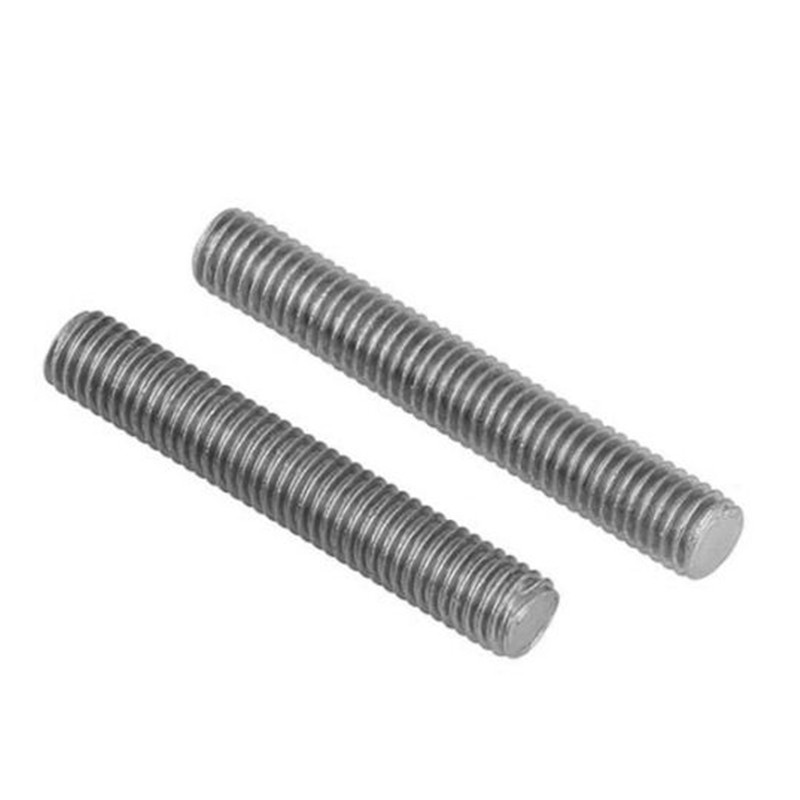
Put simply, a 4mm threaded rod is a long, slender metal bar, fully threaded along its length, with a nominal diameter of 4 millimeters. They are like extended bolts without heads or nuts, designed to be cut or fitted into assemblies requiring adjustable tension. They’re usually made from stainless steel, carbon steel, or galvanized steel, ensuring different levels of corrosion resistance and strength.
Beyond the nuts and bolts crowd, these rods are incredibly intuitive. For modern-day humanitarian aid construction, lightweight housing modules, or delicate electronics assembly, the 4mm threaded rod serves as a backbone — literally and figuratively. It's a standardized solution that reduces complexity in assembly and maintenance worldwide.
Core Elements That Define the 4mm Threaded Rod
1. Durability
Most rods come with a corrosion-resistant finish — galvanized zinc or stainless steel is common — which extends their life especially in harsh weather or chemical environments. Durability means fewer replacements and better safety margins.
2. Precision Threading
The thread pitch (distance between threads) is key: fine threads allow for tighter control and adjustments, while coarse threads speed up assembly. Selecting the right pitch impacts everything from ease of use to the longevity of the joint.
3. Material Strength
High-grade steel options mean these rods can withstand significant tension and shear forces, critical in applications ranging from machinery mounts to architectural fixtures.
4. Versatility
The 4mm diameter is small but mighty — fitting into spaces where larger rods can’t. This makes it especially popular in electronics, robotics, or lightweight frames.
5. Availability and Cost-Efficiency
Thanks to widespread manufacturing, 4mm threaded rods are available globally, often at competitive prices, which helps keep projects on budget without sacrificing quality.
| Attribute | Spec | Units | Typical Range |
|---|---|---|---|
| Diameter | 4 | mm | 4 ± 0.1 |
| Thread pitch | 0.7 | mm | Coarse/Fine available |
| Material Grade | A2 Stainless Steel / Carbon Steel | - | 300 – 800 MPa (tensile strength) |
| Length | 1000 - 3000 | mm | Cut to spec |
| Finish | Zinc Plated / Galvanized | - | Corrosion resistant options |
Where Does the 4mm Threaded Rod Show Its Worth?
Across continents and industries, these rods find their way into countless applications:
- Construction & Infrastructure: Supporting lightweight modular frameworks, handrails, and fixtures in places from Europe to East Asia.
- Electronics & Robotics: Used in precision assembly and mounting delicate components where tight tolerances matter.
- Humanitarian Engineering: Quick deployment shelters and modular units in disaster zones rely on standardized fasteners like 4mm rods to speed up assembly with minimum tools.
- Automotive and Aerospace Prototyping: Rapid, adjustable prototypes benefit from these rods’ versatility and ease of handling.
- Renewable Energy Installations: In solar panel mounts where both corrosion resistance and light structural support are vital.
For example, in the 2023 post-flood reconstruction efforts in parts of Southeast Asia, NGOs reported faster assembly times on emergency shelters when sticking to uniform fasteners like the 4mm threaded rod. It's a kind of silent efficiency you don’t always see but definitely feel.
Mini Takeaway:
- Its compact size and strength make the 4mm rod adaptable to many fields.
- The humanitarian sector especially values its availability and standardization.
- Its role often extends beyond mere fastening — it enables innovation.
Advantages of the 4mm Threaded Rod: Why Invest in This Size?
Cost-wise, 4mm rods are economical. They use less steel than larger rods and yet provide sufficient strength for numerous tasks. Thanks to better corrosion finishes and stainless steel options, they last longer, reducing replacement frequency.
Emotionally, think about safety — fastening reliability directly impacts lives when it comes to construction. A minor failure can cascade into bigger disasters, so choosing the right rod is kind of a moral imperative as well as technical one.
Moreover, from a sustainability angle, these rods, when sourced responsibly and with coated finishes, can be maintained and reused — reducing waste in fast-paced construction and manufacturing environments.
Emerging Trends: The Future of 4mm Threaded Rods
Looking ahead, innovations in material science and production methods are setting the stage for lighter, stronger rods. For instance, fiber-reinforced composite threaded rods combining carbon fibers with metals are on the horizon, offering incredible tensile strength and corrosion resistance while shaving weight.
Digitally, Industry 4.0 techniques like laser scanning and automated threading ensure precision manufacturing — vital as tolerances on miniaturized devices tighten. Also, green manufacturing practices are becoming mandatory in many countries due to stricter environmental policies, possibly raising costs but improving overall quality and sustainability.
Challenges & How the Industry Tackles Them
One of the perennial issues is inconsistent supply quality. Not all 4mm threaded rods meet ISO or ASTM standards, leading to fastener failures or mismatched threads. This is especially problematic during international procurement, where specifications may be misunderstood.
To overcome this, many vendors now offer certification, traceability, and third-party testing, adding peace of mind. Additionally, innovations in coatings can reduce problems with corrosion in salty or acidic environments, making the rods more versatile than ever.
| Supplier | Material Options | Certifications | Typical Lead Time | Price Range (USD/meter) |
|---|---|---|---|---|
| Global Rods Inc. | Stainless, Carbon Steel, Galvanized | ISO 9001, ASTM A193 | 2-3 weeks | $2.50 - $3.75 |
| Precision Threads Ltd. | High tensile stainless steel | ISO 9001, CE Mark | 1-2 weeks | $3.00 - $4.20 |
| EcoFasteners Corp. | Recycled steel options | ISO 14001, RoHS | 3-4 weeks | $2.80 - $3.50 |
FAQ: Your 4mm Threaded Rod Questions, Answered
What is the typical tensile strength of a 4mm threaded rod?
A standard 4mm threaded rod made of A2 stainless steel typically has a tensile strength around 500-700 MPa, depending on the grade and finish. Higher tensile grades can reach above 800 MPa. This means they can withstand substantial stretching forces before failure, making them reliable for multiple applications.
Can I use 4mm threaded rods in outdoor environments?
Yes, but material choice matters. Stainless steel and galvanized rods resist corrosion well in outdoor applications. If exposed to saltwater or acidic environments, it's best to choose marine-grade stainless steel or specialized coatings to ensure longer life.
Are 4mm threaded rods easy to cut and customize onsite?
They are fairly easy to cut using metal cutters or saws. However, cutting can affect the thread integrity, so usually, the cut end must be re-threaded or handled carefully to ensure nuts screw on without damage.
How does the thread pitch affect the performance?
Fine threads (smaller pitch) provide better grip and tension control, useful in detailed mechanical assemblies. Coarse threads are faster to assemble and better for applications where vibration or loosening is a concern. Choose based on the application requirements.
Where can I source quality 4mm threaded rods globally?
Qualified suppliers like those listed above provide global shipping, often with certification and batch testing. It's best to verify their adherence to ISO or ASTM standards to ensure quality and consistency.
Wrapping It Up: Why the Small 4mm Threaded Rod Packs a Big Punch
It’s pretty fascinating how such a small part can have big consequences — structurally, economically, and even on a humanitarian scale. The 4mm threaded rod, with its blend of precision, strength, and availability, continues to support everything from tiny electronics to emergency shelters. As industries push toward greener and smarter manufacturing, this fastener will adapt, innovate, and stay central to the engineering world.
Curious to find out more or explore product options? Visit our website for comprehensive specs, custom orders, and expert advice tailored to your needs.
Final Mini Takeaway:
- 4mm threaded rods are essential, versatile fasteners with global importance.
- Choosing the right material, pitch, and vendor ensures safety and performance.
- The future will bring even more innovation — so keep an eye on this small but mighty component.
References:
1. ISO 898-1: Mechanical properties of fasteners
2. Threaded rod - Wikipedia
3. World Bank Urban Development Data
Post time: Nov . 27, 2025 10:50


 English
  Albanian
  Arabic
  Armenian
  Azerbaijani
  Belarusian
  Bosnian
  Bulgarian
  Cebuano
  Corsican
  Czech
Czech  Galician
  Georgian
  Greek
Greek  Hausa
Hausa  Hebrew
  Hungarian
  Igbo
Igbo  Indonesian
  Italian
  Kazakh
  Khmer
Khmer  Korean
  Kurdish
  Kyrgyz
  Lao
Lao  Latin
Latin  Latvian
  Lithuanian
  Malay
Malay  Myanmar
  Nepali
  Polish
  Portuguese
  Russian
  Serbian
  Sesotho
  Shona
Shona  Sindhi
  Spanish
  Tagalog
  Tajik
Tajik  Thai
Thai  Turkish
  Turkmen
  Ukrainian
  Uzbek
Uzbek  Vietnamese
  Yoruba
  Zulu
Zulu