

DIN125 Flat Washer — practical notes from the shop floor
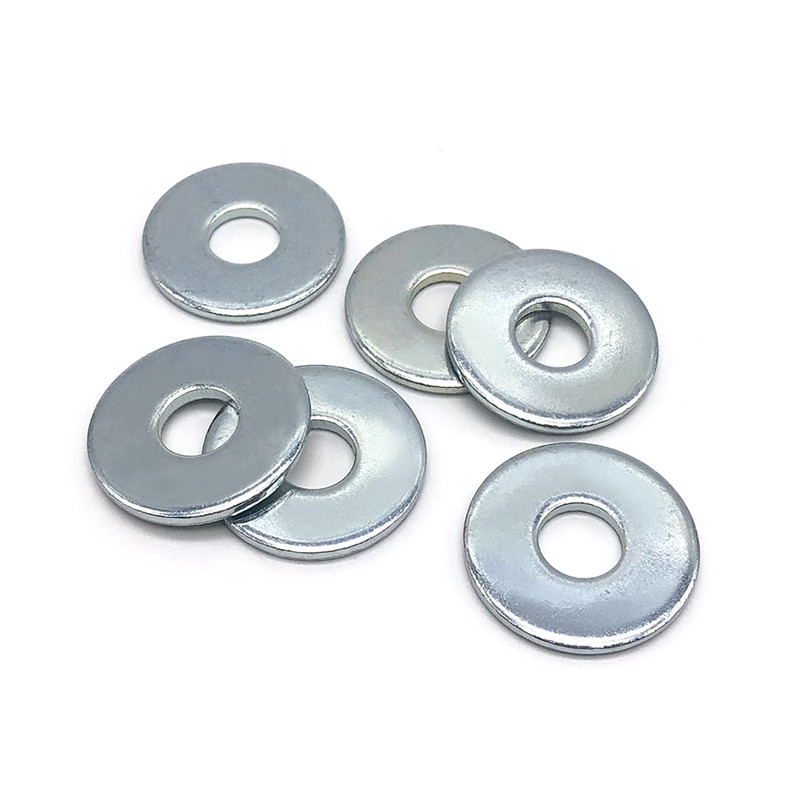
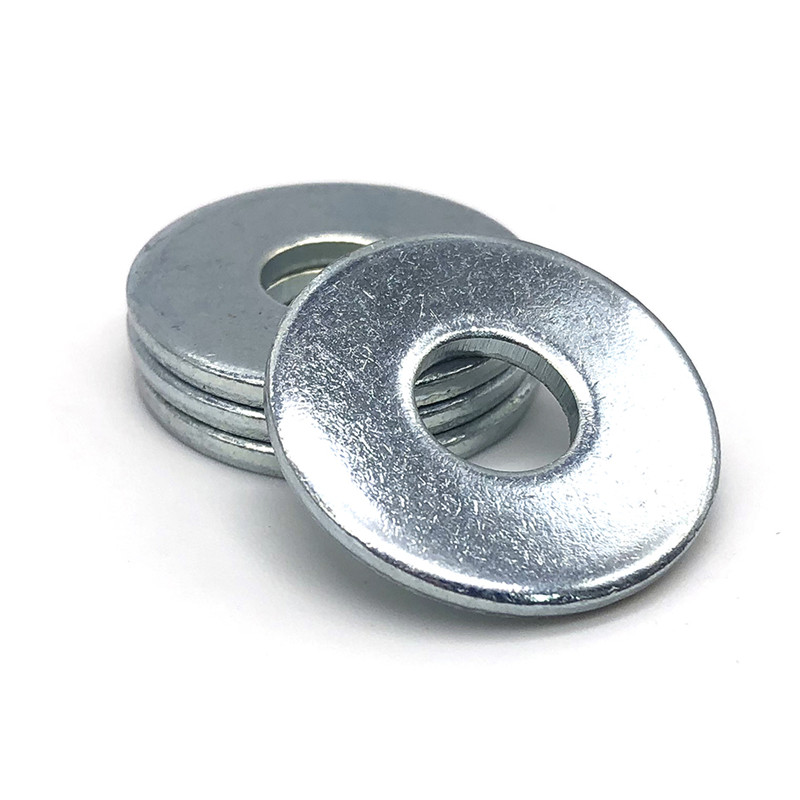
If you’ve ever watched a joint slowly bite into a painted panel, you know why a Zinc Plated Flat Washer matters. Originating from Dongtantou North, Yongnian, Hebei (yes, the fastener capital), this DIN125 Flat Washer is the humble spacer that prevents surface sinking and spreads the load. In fact, many customers say it’s the cheapest insurance policy on a neat assembly. Short version: bigger bearing surface, less pressure on your part, fewer call-backs.
What’s trending (and why it matters)
The fastener crowd is moving toward Cr3+ passivation, RoHS/REACH compliance, and better traceability. Actually, end-users also ask for longer salt-spray hours without overpaying for exotic coatings. The sweet spot for a Zinc Plated Flat Washer today is consistent zinc thickness, decent hardness, and packaging that doesn’t scuff the finish. Sounds simple; surprisingly, not everyone gets it right.
Key specifications (real-world, not brochure-speak)
| Standard | DIN 125 (≈ ISO 7089) |
| Material | Low-carbon steel (Q235 / SAE 1018), others on request |
| Hardness | HV ≈ 100–200 (DIN class); hardened options per ASTM F436 available |
| Zinc plating | ASTM B633 Fe/Zn, thickness ≈ 5–12 μm, Cr3+ passivation |
| Salt spray (neutral) | ≈ 72–240 h per ASTM B117 (depends on coating build), real-world use may vary |
| Size range | M3–M36 common; OD and thickness per DIN, custom OD/ID available |
| Certs | RoHS, REACH, material and plating test reports on batch |
How it’s made (short but honest)
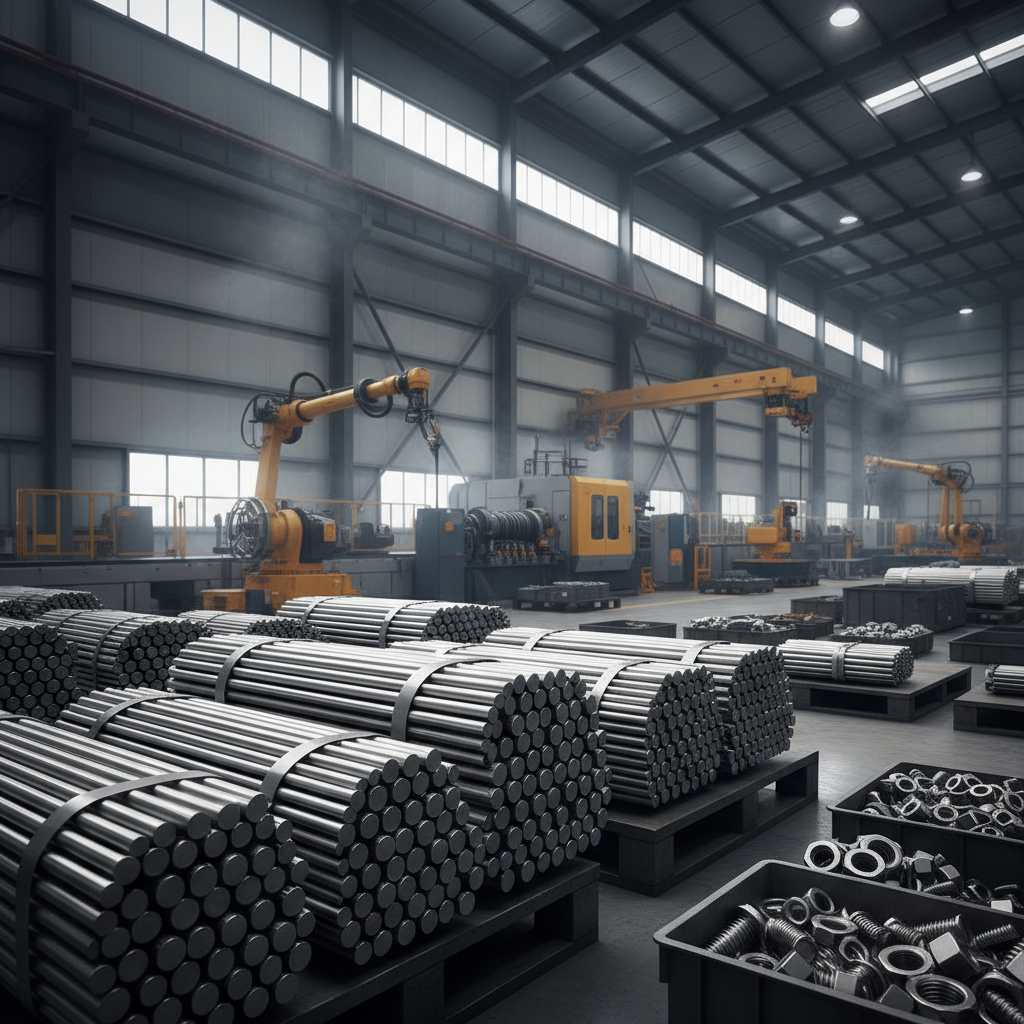
- Materials: coil steel (Q235/1018), traceable heat numbers.
- Methods: stamping blank → piercing ID → tumble deburr → optional chamfering.
- Conditioning: controlled hardness per DIN; F436 versions are heat-treated.
- Plating: alkaline or acid zinc → Cr3+ passivation; thickness checked (ISO 2178/1463).
- Hydrogen relief: baking post-plate for high-strength parts (belt-and-suspenders approach).
- Testing: dimensions per DIN 125/ISO 7089, coating per ASTM B633, corrosion per ASTM B117.
Service life? Indoors, dry: often 5–10 years. Coastal or high-humidity: 1–3 years unless upgraded to thicker zinc or topcoats. To be honest, application trumps lab data every time.
Where it’s used
Control panels, HVAC frames, machine guards, racking, light-duty automotive brackets, and construction fixtures. A Zinc Plated Flat Washer is the go-to when you need to spread load without chewing up paint or composites.
Vendor snapshot (why buyers compare)
| Vendor | Lead time | MOQ | Certs/Docs | Customization | Price index |
|---|---|---|---|---|---|
| Hebei factory (Yongnian) | ≈ 7–15 days | Low (carton-level) | RoHS, REACH, salt-spray, thickness | OD/ID, plating μm, logo, packs | $ (competitive) |
| Generic trader | ≈ 15–25 days | Medium | Basic COC, limited tests | Limited | $$ |
| Branded import | Stock or 30+ days | Low | Full lab reports | Standard only | $$$ |
Customization and feedback
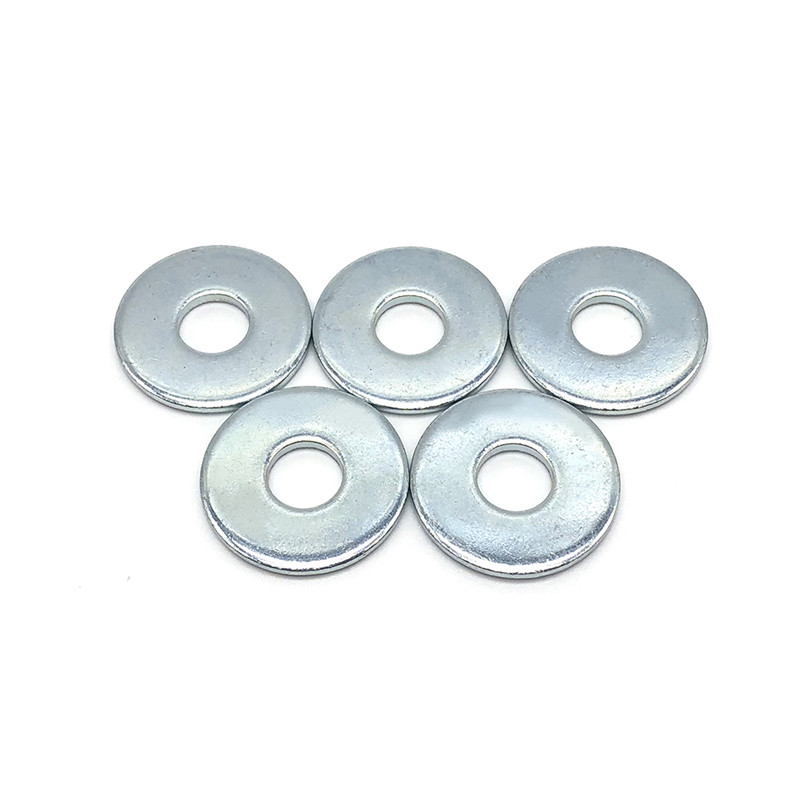
OD/ID tweaks for oversized holes, thicker washers for soft plastics, zinc 8–12 μm for extended indoor life, and neat branded cartons—these are the common asks. Many customers say the consistent plating color (that clean blue-white) is what stands out. I guess details still win.
Mini case: panel builder, midwest
Swapping generic washers for a Zinc Plated Flat Washer with 8–10 μm zinc and tighter OD tolerance cut paint “halo” marks by ~40% and improved torque retention under 500 h vibration testing (shop jig, not a lab). Not glamorous, but on a 2,000-panel run the rework savings were very real.
Authoritative references
- DIN 125 / ISO 7089 — Plain washers, product grades A and C.
- ISO 4042 — Fasteners, electroplated coatings.
- ASTM B633 — Standard for electrodeposited zinc coatings.
- ASTM B117 — Neutral salt spray test method.
- ASTM F436 — Hardened steel washers (optional grade).
- RoHS/REACH — EU environmental compliance for coatings.
Post time: Oct . 23, 2025 18:55



 English
  Albanian
  Arabic
  Armenian
  Azerbaijani
  Belarusian
  Bosnian
  Bulgarian
  Cebuano
  Corsican
  Czech
Czech  Galician
  Georgian
  Greek
Greek  Hausa
Hausa  Hebrew
  Hungarian
  Igbo
Igbo  Indonesian
  Italian
  Kazakh
  Khmer
Khmer  Korean
  Kurdish
  Kyrgyz
  Lao
Lao  Latin
Latin  Latvian
  Lithuanian
  Malay
Malay  Myanmar
  Nepali
  Polish
  Portuguese
  Russian
  Serbian
  Sesotho
  Shona
Shona  Sindhi
  Spanish
  Tagalog
  Tajik
Tajik  Thai
Thai  Turkish
  Turkmen
  Ukrainian
  Uzbek
Uzbek  Vietnamese
  Yoruba
  Zulu
Zulu