

Understanding the 1/4 UNC Threaded Bar: A Veteran's Take
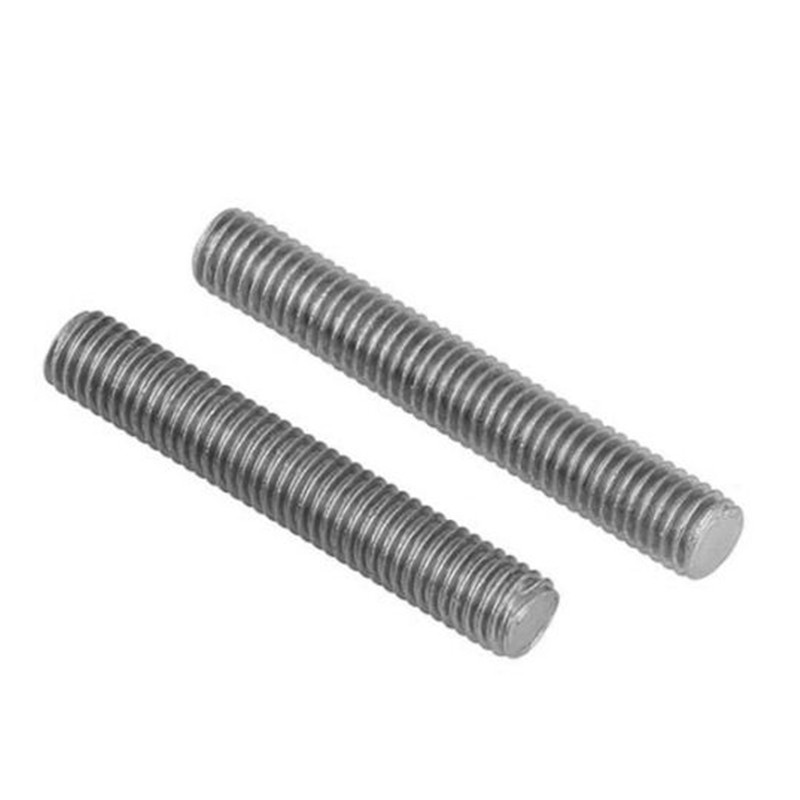
After spending over a decade working closely in the industrial equipment sector, I’ve come to appreciate how seemingly simple components like the 1/4 UNC threaded bar form the backbone of countless projects. You might glance at one and think, “It’s just a metal rod with threads.” But, franky, there’s more than meets the eye here, especially when you start looking at specs, materials, and the little nuances that can make or break an application.
The “1/4 UNC” bit, for starters, refers to a Unified National Coarse thread standard with a nominal diameter of a quarter inch. It’s one of the more common thread sizes you’ll encounter, especially in North American industrial or mechanical applications. Engineers I’ve talked to often prefer UNC threads for their ease of assembly and relative durability in harsh environments. It’s strange how this thread profile strikes a nice balance: not so fine that it strips easily, but tight enough to hold firm in most cases.
Oddly enough, the choice of material for these bars can really affect their performance. Most 1/4 UNC threaded bars I’ve handled come in grade 2 or grade 5 steel, sometimes stainless steel for corrosion resistance. I recall a project in a saltwater environment where switching from plain steel to stainless steel bars made a night-and-day difference, reducing maintenance headaches. Many engineers say stainless steel threaded bars feel “grippier” when tightened, though that might be more about confidence than physics.
1/4 UNC Threaded Bar Typical Specifications
| Specification | Detail |
|---|---|
| Thread Size | 1/4 inch (0.250 in) |
| Thread Type | Unified National Coarse (UNC) |
| Threads per Inch (TPI) | 20 |
| Material | Steel (Grade 2, Grade 5), Stainless Steel options |
| Length Range | Various, typically 1 inch to 72 inches |
| Surface Finish | Plain, Zinc-plated, Black Oxide |
In real terms, when sourcing a 1/4 UNC threaded bar, you want to think about your environment and application. For outdoor uses or where moisture is common, steel bars without corrosion protection tend to rust quickly, so opting for zinc plating or stainless steel is almost mandatory. One thing I learned, which isn’t always obvious from the product datasheet, is that surface finish affects not just corrosion resistance but also thread lubrication. I’ve seen teams struggle with seized threads simply because the finish was too rough or dry.
Comparing Major Vendors for 1/4 UNC Threaded Bars
| Vendor | Material Options | Length Customization | Typical Lead Time | Price Range (per bar) |
|---|---|---|---|---|
| HBTBLS | Steel, Stainless Steel | 1" to 72", cut-to-length available | 3-5 days | $0.50 - $3.00 |
| Fastenal | Steel, Zinc-plated | Standard sizes mostly | 1-7 days | $0.60 - $4.00 |
| Grainger | Steel, Stainless Steel, Alloy | Some cut-to-length, mostly standard | 5-10 days | $0.70 - $4.50 |
I once helped a small manufacturing shop source a batch of 1/4 UNC threaded bars for their prototype assembly line. They initially ordered from a local supplier, but some bars didn’t meet the tolerance requirements and caused alignment problems. After switching to a vendor who offered tighter specs and cut-to-length options, the assembly process smoothed out considerably. It’s funny how a “simple” part can cause so many workflow hitches if you’re not careful.
One tip from years on the floor: when you order these threaded bars in bulk, always confirm the thread gauge and ensure consistency. Some suppliers have looser standards, and that sort of variability might not be visible in a quick glance but becomes obvious in assembly and torque testing.
To wrap things up, the 1/4 UNC threaded bar is an unassuming hero in so many engineering feats. While it looks straightforward, understanding specs, materials, and sourcing nuances—like those offered by HBTBLS—can save you time, money, and a lot of headaches. If you’re in the industrial equipment business, it’s worth knowing your threaded bars the way a carpenter knows their chisel.
“Even the smallest component tells a story of design, wear, and utility—if you listen closely.”
- Unified Thread Standards, ASME B1.1 – The industry baseline for UNC threads.
- Materials Handbook for Mechanical Engineers – On steel grades and corrosion resistance.
- Field notes from industrial assembly team, 2015–2023 experience.
Post time: Dec . 03, 2025 16:08



 English
  Albanian
  Arabic
  Armenian
  Azerbaijani
  Belarusian
  Bosnian
  Bulgarian
  Cebuano
  Corsican
  Czech
Czech  Galician
  Georgian
  Greek
Greek  Hausa
Hausa  Hebrew
  Hungarian
  Igbo
Igbo  Indonesian
  Italian
  Kazakh
  Khmer
Khmer  Korean
  Kurdish
  Kyrgyz
  Lao
Lao  Latin
Latin  Latvian
  Lithuanian
  Malay
Malay  Myanmar
  Nepali
  Polish
  Portuguese
  Russian
  Serbian
  Sesotho
  Shona
Shona  Sindhi
  Spanish
  Tagalog
  Tajik
Tajik  Thai
Thai  Turkish
  Turkmen
  Ukrainian
  Uzbek
Uzbek  Vietnamese
  Yoruba
  Zulu
Zulu