

DIN125 Flat Washer: a field note on what really matters
If you’ve spent time on a jobsite or at a bench, you already know the humble zinc plated flat washer does more than “just sit there.” It spreads load, stops imprinting, and—when specified correctly—saves threads, coatings, and in some cases, your schedule. I’ve toured plants in Yongnian (the fastener capital of China), and the better shops still obsess over three things: steel, plating, and consistency.
What it is, and why DIN125 still matters
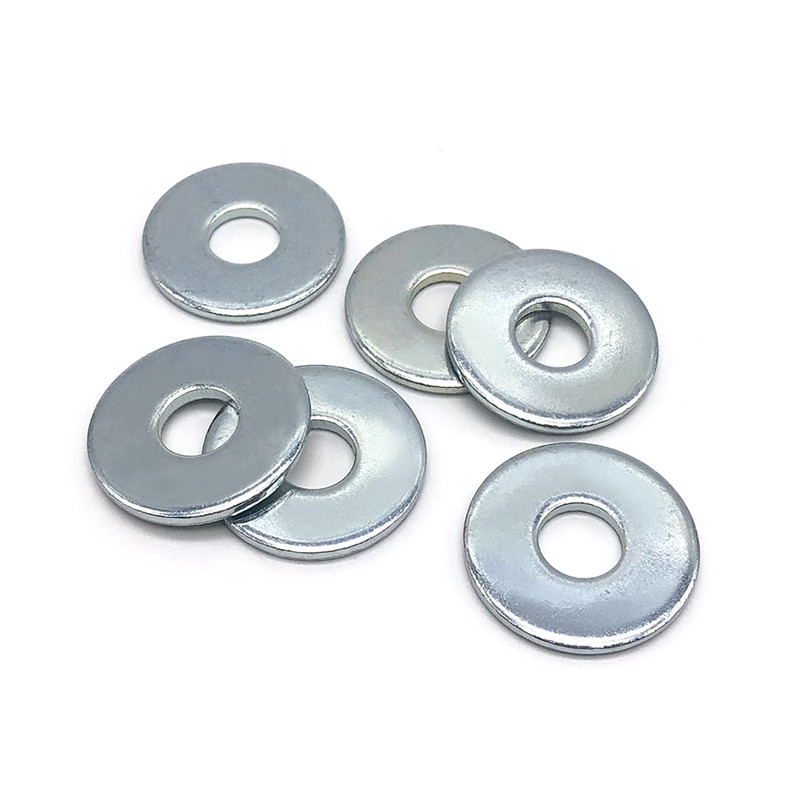
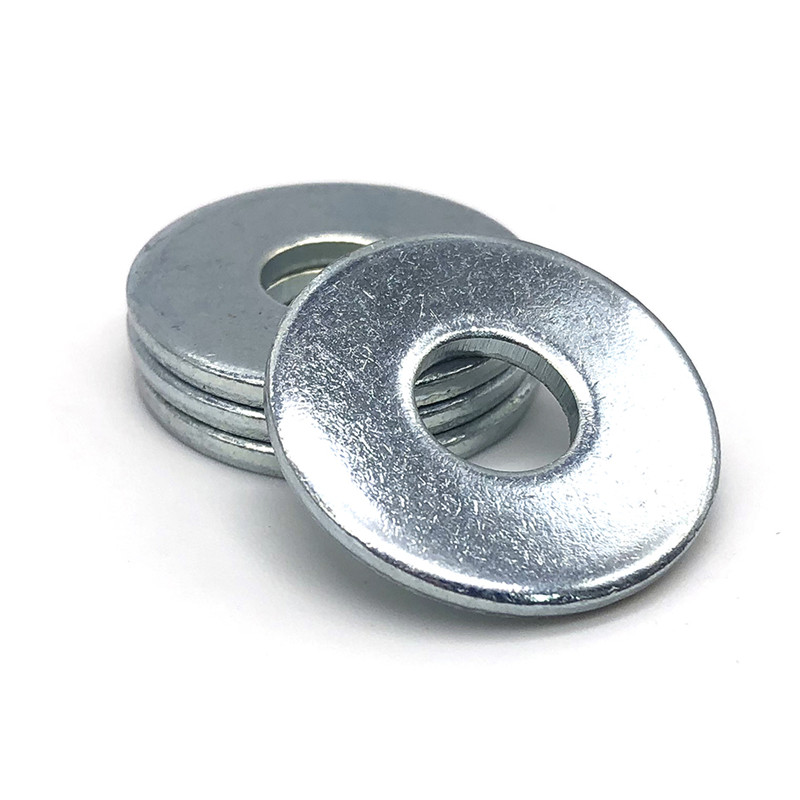
DIN125 (aligned with ISO 7089/7090) is the classic flat washer spec. In short: it increases the screw’s bearing surface and reduces surface pressure on the part—so the material doesn’t “sink” under the head. A good zinc plated flat washer uses low-carbon steel (think Q235/SAE1008–1022) and a controlled electro-zinc finish, usually trivalent passivated for RoHS compliance. Indoors, it’s the right blend of price and protection; outdoors, it’s okay in mild conditions, but salt or industrial atmospheres call for thicker zinc or different coatings.
Industry trends I’m seeing
- Shift to trivalent passivation (no hex-Cr) to meet RoHS/REACH.
- Heavier zinc (≈8–12 μm) for longer neutral salt spray hours (real-world may vary).
- Tighter process control: automated thickness and HV checks becoming standard even for commodity washers.
Typical process flow (real shops, real checks)
Material slit → stamping/piercing → deburring/tumbling → (optional) stress relief → electro-zinc per ASTM B633 → trivalent passivation → baking for hydrogen relief when required → dimensional inspection per ISO 3269 → salt spray sampling per ISO 9227 → packing. A seasoned line in Dongtantou North, Yongnian, Hebei, China will run this all day and still stop to re-verify ID/OD after tool changes—seen it firsthand.
Snapshot test data (typical, not a guarantee)
Zinc thickness: 8–12 μm; NSS: ≈96–168 h to red rust on flats; Hardness: HV 140–200; Dimensions per DIN125A unless otherwise noted.
Product specs: DIN125 Flat Washer
| Parameter | Typical Value | Notes |
|---|---|---|
| Standard | DIN125A / ISO 7089 | Flat, no chamfer; B/7090 on request |
| Material | Low carbon steel (Q235/SAE 1008–1022) | Stainless/Alloy on request |
| Finish | Electro-zinc, trivalent Cr | Blue/clear/yellow passivation |
| Zinc thickness | ≈8–12 μm | ASTM B633 Fe/Zn |
| Sizes | M5–M24 common | Custom ID/OD/t available |
| Compliance | RoHS, REACH | Material + plating docs |
Where they’re used (and why they’re chosen)
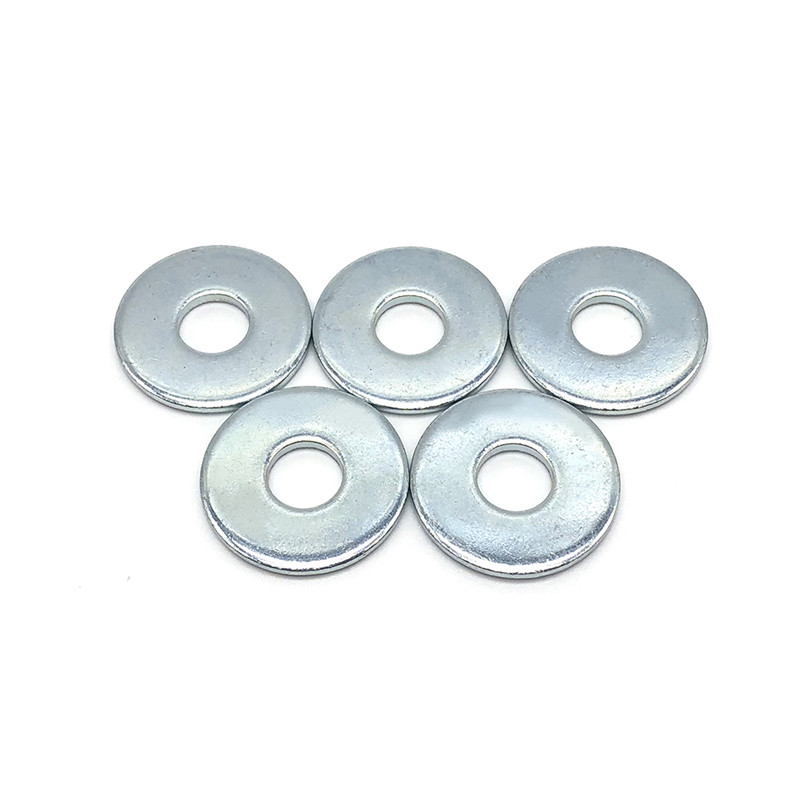
Construction hardware, HVAC frames, electrical enclosures, machinery panels, solar rails, automotive aftermarket. The advantages are simple: cost-effective load spreading, fewer paint fractures, better torque retention. Many customers say a straightforward zinc plated flat washer keeps powder coat from “ringing” around bolt heads—sounds minor, but it saves rework.
Vendor snapshot (indicative)
| Vendor | Lead Time | MOQ | Zinc μm | Certs | Customization |
|---|---|---|---|---|---|
| Hebei Yongnian Producer (Dongtantou North) | 7–15 days | ≈50–200 kg | 8–12 | ISO 9001, RoHS | ID/OD/t, packaging |
| Regional Distributor | Stock–5 days | 1 box | 5–8 | Basic CoC | Limited |
| Global Marketplace Seller | 10–30 days | Varies | 6–10 | Varies | Varies |
Customization notes
Need oversized OD for composites, tighter thickness tolerance for torque studies, or yellow zinc for visual ID? Easy asks. For coastal installs, push zinc ≥12 μm or consider Zn-Ni or hot-dip where spec allows.
Quick case files
- Solar contractor, coastal: moved to 12 μm zinc + clear passivation; NSS improved from ≈96 h to ≈168 h; field callbacks dropped noticeably.
- Machinery OEM: switched to tighter OD tolerance to protect powder coat; painters reported fewer halo marks; assembly torque scatter decreased slightly.
Certs and compliance
Look for ISO 9001 QMS, RoHS and REACH declarations, plating to ASTM B633, and dimensional conformance to DIN125/ISO 7089. For documentation-led industries (electrical, HVAC, public projects), this paperwork avoids headaches later.
References:
- ISO 7089/7090: Plain washers, product grade A.
- ASTM B633: Standard Specification for Electrodeposited Coatings of Zinc on Iron and Steel.
- ISO 9227: Corrosion tests in artificial atmospheres—Salt spray tests.
- ISO 3269: Fasteners—Acceptance inspection.
- RoHS Directive 2011/65/EU and REACH Regulation (EC) No 1907/2006.
Post time: Oct . 18, 2025 16:55




 English
  Albanian
  Arabic
  Armenian
  Azerbaijani
  Belarusian
  Bosnian
  Bulgarian
  Cebuano
  Corsican
  Czech
Czech  Galician
  Georgian
  Greek
Greek  Hausa
Hausa  Hebrew
  Hungarian
  Igbo
Igbo  Indonesian
  Italian
  Kazakh
  Khmer
Khmer  Korean
  Kurdish
  Kyrgyz
  Lao
Lao  Latin
Latin  Latvian
  Lithuanian
  Malay
Malay  Myanmar
  Nepali
  Polish
  Portuguese
  Russian
  Serbian
  Sesotho
  Shona
Shona  Sindhi
  Spanish
  Tagalog
  Tajik
Tajik  Thai
Thai  Turkish
  Turkmen
  Ukrainian
  Uzbek
Uzbek  Vietnamese
  Yoruba
  Zulu
Zulu