

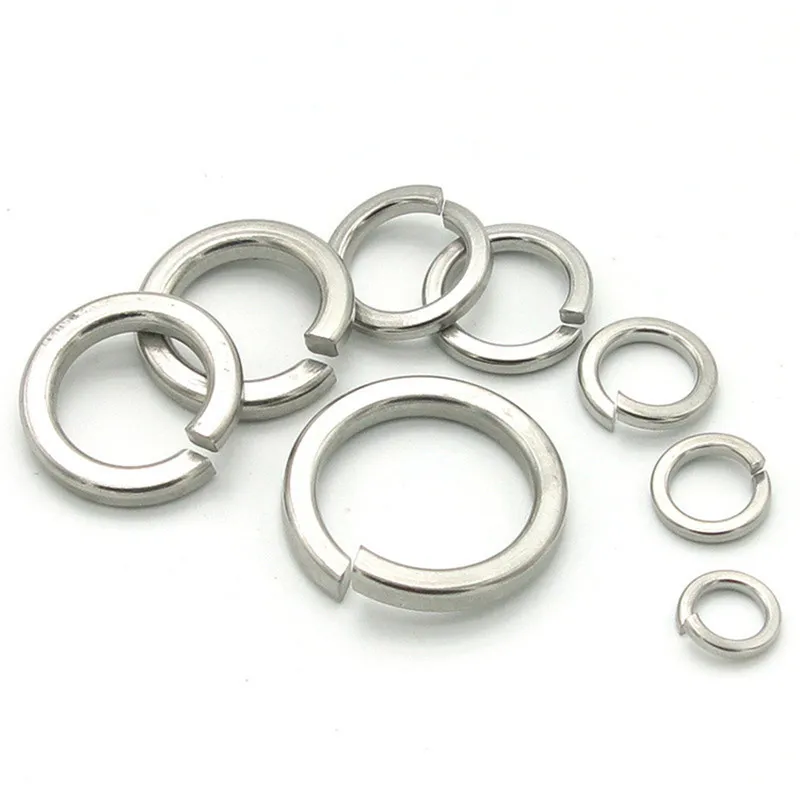
In mechanical engineering and industrial applications, the DIN127B spring washer serves as a critical component for maintaining secure fastening under dynamic conditions. This specialized washer, part of the broader DIN127 washer family, provides unique functional advantages that distinguish it from standard flat washers and other fastener components. The DIN127 spring washer design follows precise German Institute for Standardization (DIN) specifications to ensure consistent performance across applications. This article examines the technical characteristics, primary functions, and industrial applications of the DIN127B spring washer, while comparing it with other variants in the DIN127 washer series. Understanding the specific role of these components helps engineers and technicians select the optimal fastening solutions for vibration-prone assemblies and critical mechanical connections.
Primary Functions of the DIN127B Spring Washer
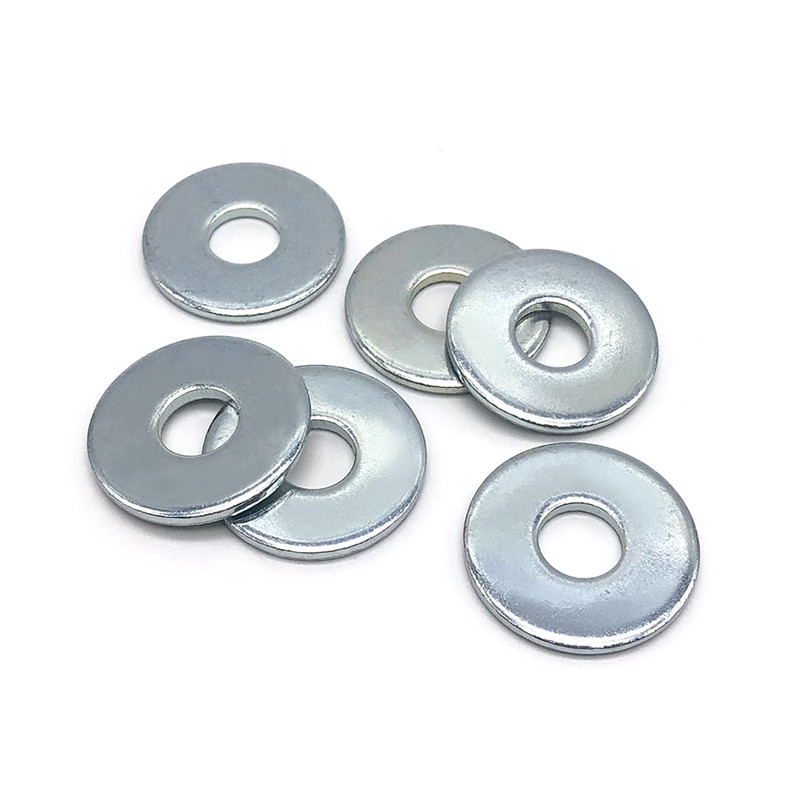
The DIN127B spring washer serves three fundamental purposes in mechanical fastening systems: vibration resistance, tension maintenance, and electrical grounding. When installed properly under a bolt head or nut, the DIN127 spring washer compresses to create a spring force that counters loosening caused by vibration or thermal cycling. This differs from standard DIN127 washer flat versions that only distribute load. The squared edges of the DIN127B spring washer bite slightly into both the fastener and work surface, providing additional resistance to rotation. In electrical applications, the DIN127 spring washer ensures positive contact between components by maintaining constant pressure as materials expand and contract. The specific geometry of the DIN127B spring washer provides optimal balance between spring force and material stress, preventing the washer from taking a permanent set under normal operating conditions. These characteristics make it particularly valuable in automotive, machinery, and structural applications where vibration would otherwise compromise joint integrity over time.
Material Specifications for DIN127 Washer Components
The manufacturing standards for DIN127B spring washer products specify precise material requirements to ensure consistent performance. Most DIN127 spring washer components are produced from high-carbon steel (grade Ck67 or equivalent) that is heat-treated to achieve the necessary spring properties. The DIN127 washer standard permits various surface treatments including zinc plating (yellow or blue passivated), galvanization, or phosphate coatings for corrosion resistance without compromising the spring function. The material thickness of a DIN127B spring washer is carefully controlled to provide the designed spring rate while maintaining sufficient strength to prevent flattening under load. Some specialized versions of the DIN127 spring washer are manufactured from stainless steel (typically A2 or A4 grades) for applications requiring enhanced corrosion resistance. The material specifications in the DIN127 washer standard ensure that all compliant washers, regardless of manufacturer, will perform predictably when used within their rated capacity limits.
Industrial Applications for DIN127B Spring Washer
The DIN127B spring washer finds widespread use across industries where vibration resistance is critical to assembly integrity. Automotive manufacturers utilize these washers extensively in engine mounts, suspension components, and drivetrain assemblies where constant vibration would loosen standard fasteners. Industrial machinery applications for the DIN127 spring washer include pump housings, motor mounts, and gearbox assemblies where rotational forces create vibration. The DIN127 washer series is particularly valued in electrical panel construction for maintaining ground connections under thermal cycling conditions. Compared to other DIN127 spring washer variants, the Type B version is often specified for medium-duty applications in agricultural equipment, conveyor systems, and HVAC installations. The balanced spring characteristics of the DIN127B spring washer make it suitable for assemblies experiencing moderate vibration levels without requiring the higher spring force of Type C washers. Proper application requires matching the washer type to the expected vibration frequency and amplitude characteristics of each specific application.
Installation Best Practices for DIN127 Spring Washer
Correct installation methods maximize the effectiveness of the DIN127B spring washer in preventing fastener loosening. The DIN127 spring washer should always be installed between the fastener head (or nut) and the workpiece, with the open end of the washer helix facing toward the workpiece surface. Unlike standard DIN127 washer flat versions, spring washers should never be used with additional flat washers on both sides as this defeats their spring action. When installing a DIN127B spring washer, technicians must achieve sufficient preload during tightening to partially compress the washer and create the necessary spring tension. Over-tightening can cause the DIN127 spring washer to flatten permanently, while under-tightening fails to engage its vibration-resistant properties. The DIN127 washer standard assumes proper surface finish on both the fastener and workpiece - rough surfaces may require supplemental flat washers to prevent the DIN127B spring washer from digging in excessively. Periodic retightening may be necessary in extremely high-vibration environments, though properly installed DIN127 spring washer components should maintain tension through normal operating conditions.
DIN127B Spring Washer FAQs
What distinguishes the DIN127B spring washer from other types in the DIN127 series?
The DIN127B spring washer features a square cross-section that provides medium spring force, positioned between the lighter Type A (rounded section) and heavier Type C (rectangular section) in the DIN127 washer family, making it ideal for general industrial applications.
Can DIN127 spring washer components be reused in critical applications?
While DIN127B spring washer products may physically permit reuse, critical applications should always use new washers as the spring characteristics degrade with each compression cycle, potentially compromising vibration resistance in sensitive assemblies.
What torque specifications apply when using a DIN127 washer spring type?
Torque values for assemblies using DIN127 spring washer components follow standard specifications for the bolt size and grade, with the washer's spring action accounting for approximately 10-15% of the total clamping force in properly designed joints.
How does temperature affect the performance of DIN127B spring washer products?
The DIN127 spring washer maintains effectiveness across a wide temperature range (-30°C to +120°C for standard materials), though extreme heat can anneal the spring steel while severe cold may make the DIN127B spring washer brittle in some applications.
Are there alternatives to DIN127 washer spring types for vibration resistance?
While other solutions like thread-locking compounds or wedge washers exist, the DIN127 spring washer remains a cost-effective, standardized solution for many applications, with the DIN127B spring washer offering optimal balance between performance and ease of installation.
Premium DIN127 Washer Solutions for Your Industrial Needs,The DIN127B spring washer represents an engineered solution to vibration-related fastening challenges across numerous industries. Our company stocks a complete range of DIN127 spring washer products, including the versatile Type B version, all manufactured to exacting DIN standards for reliable performance. Visit our website today to explore our comprehensive selection of DIN127 washer components, from standard carbon steel versions to specialized stainless steel and coated alternatives. Our technical team can help you select the ideal DIN127B spring washer for your specific application requirements, ensuring optimal vibration resistance and long-term joint integrity. Trust our expertise in industrial fastening solutions - contact us now to discuss your project needs or request samples of our premium DIN127 spring washer products for evaluation.
Post time: Sep . 04, 2025 11:18


 English
  Albanian
  Arabic
  Armenian
  Azerbaijani
  Belarusian
  Bosnian
  Bulgarian
  Cebuano
  Corsican
  Czech
Czech  Galician
  Georgian
  Greek
Greek  Hausa
Hausa  Hebrew
  Hungarian
  Igbo
Igbo  Indonesian
  Italian
  Kazakh
  Khmer
Khmer  Korean
  Kurdish
  Kyrgyz
  Lao
Lao  Latin
Latin  Latvian
  Lithuanian
  Malay
Malay  Myanmar
  Nepali
  Polish
  Portuguese
  Russian
  Serbian
  Sesotho
  Shona
Shona  Sindhi
  Spanish
  Tagalog
  Tajik
Tajik  Thai
Thai  Turkish
  Turkmen
  Ukrainian
  Uzbek
Uzbek  Vietnamese
  Yoruba
  Zulu
Zulu